Among Friends. Appearances Can Be Deceiving: Ornate Tree Lizard, by Walt Anderson
We humans may try to keep up appearances, but some lizards do so to an even greater extent; their very lives depend on it. What better way to talk about appearances then discussing one who is ornate by its very name!
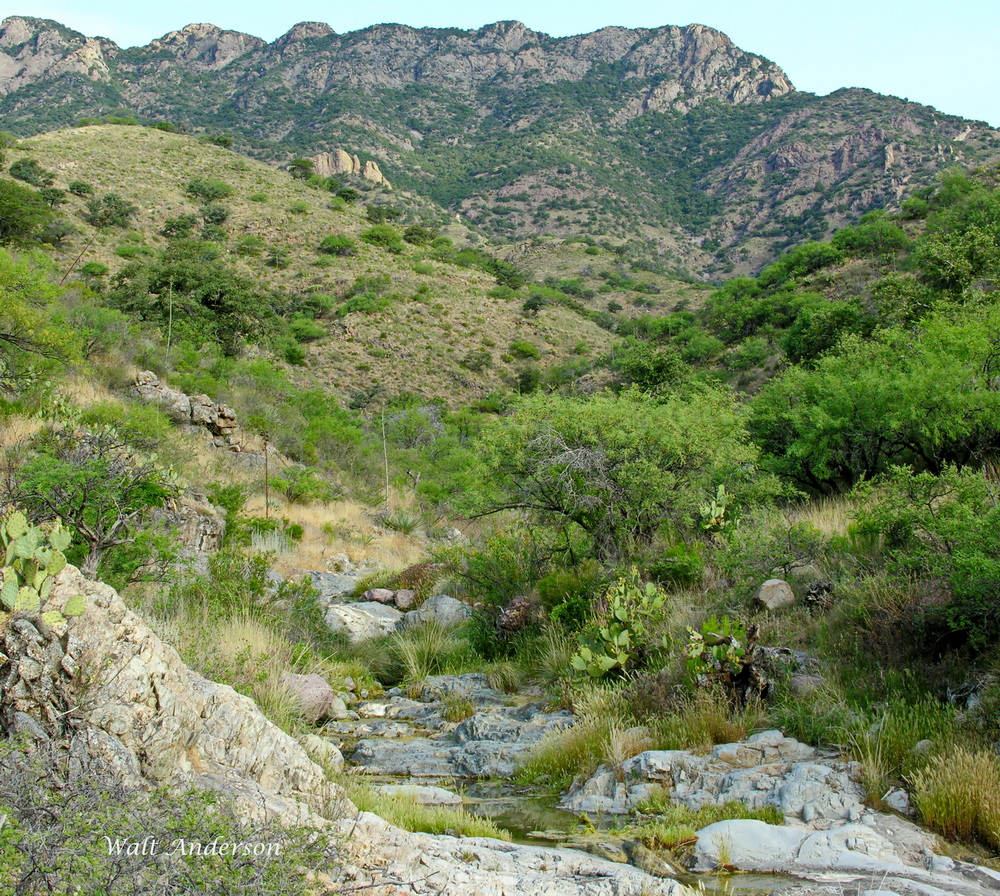
Brown Canyon in the Baboquivaris is perfect habitat for tree lizards, which use rocks as much as they use trees. The Ornate Tree Lizard is found almost anywhere in Arizona where there are suitable substrates for it to live on. Its range also includes much of New Mexico and portions of Texas, Colorado, Nevada, California, and Wyoming, as well as part of northern Mexico. It has adapted well to urban environments too, though it has to have adequate food supply and shelter (which is why it slips into houses!). Cats can be a major limiting factor!
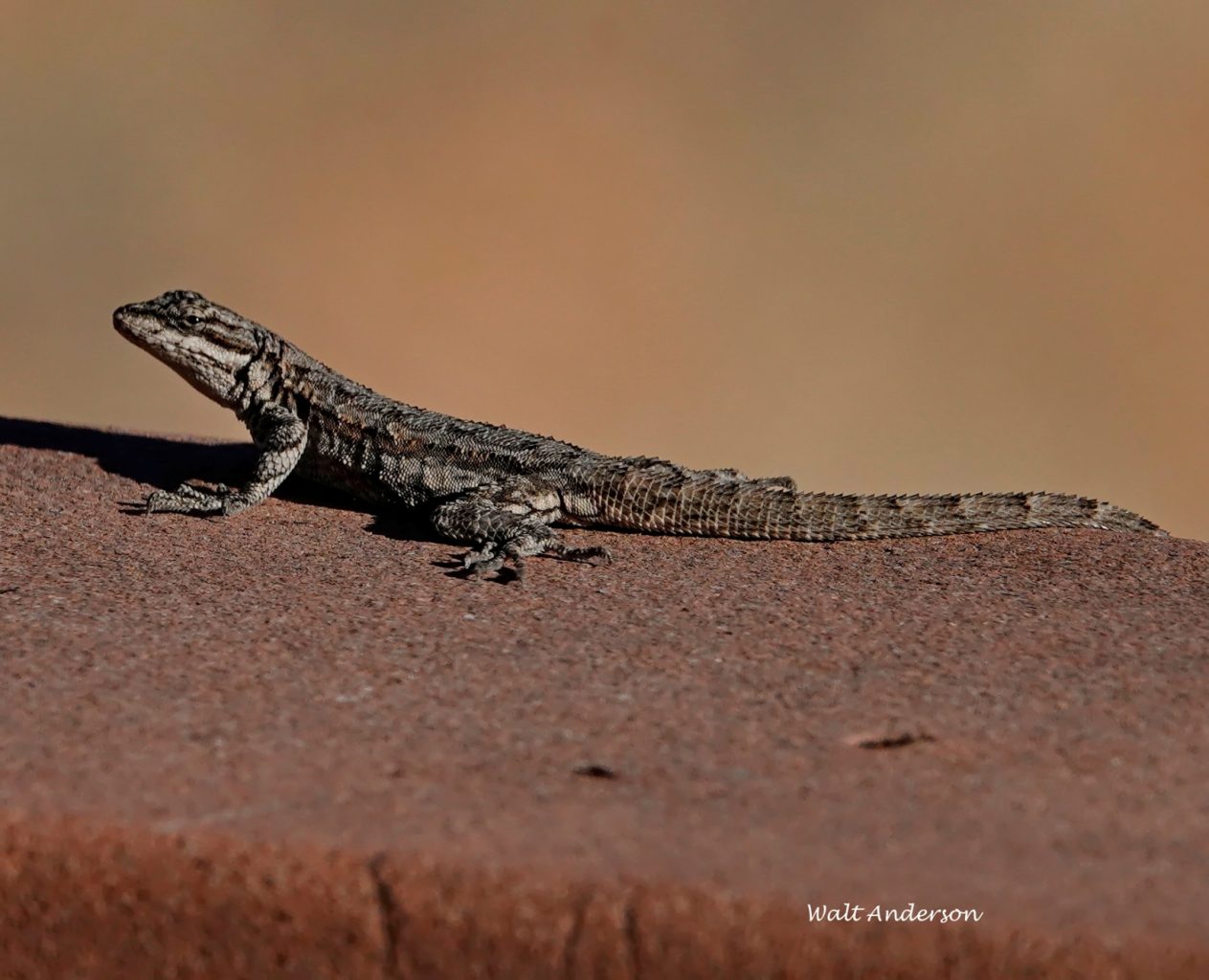
Pictures can be deceiving. Without a sense of scale, you might think this critter could be as big as an alligator or maybe even a Komodo Dragon. So first you must realize that this is one of our smallest lizards, mere inches long. That alone makes it hard for us with normal eyesight to see and appreciate the detailed patterns of these tykes.
Long and slender, with a tail less than twice the length of the body, the lizard has a dark line that runs through the eye to the snout, a pale stripe above the mouth, dark bands on the legs, paired irregular blotches on the back, and a banded tail with keeled scales.
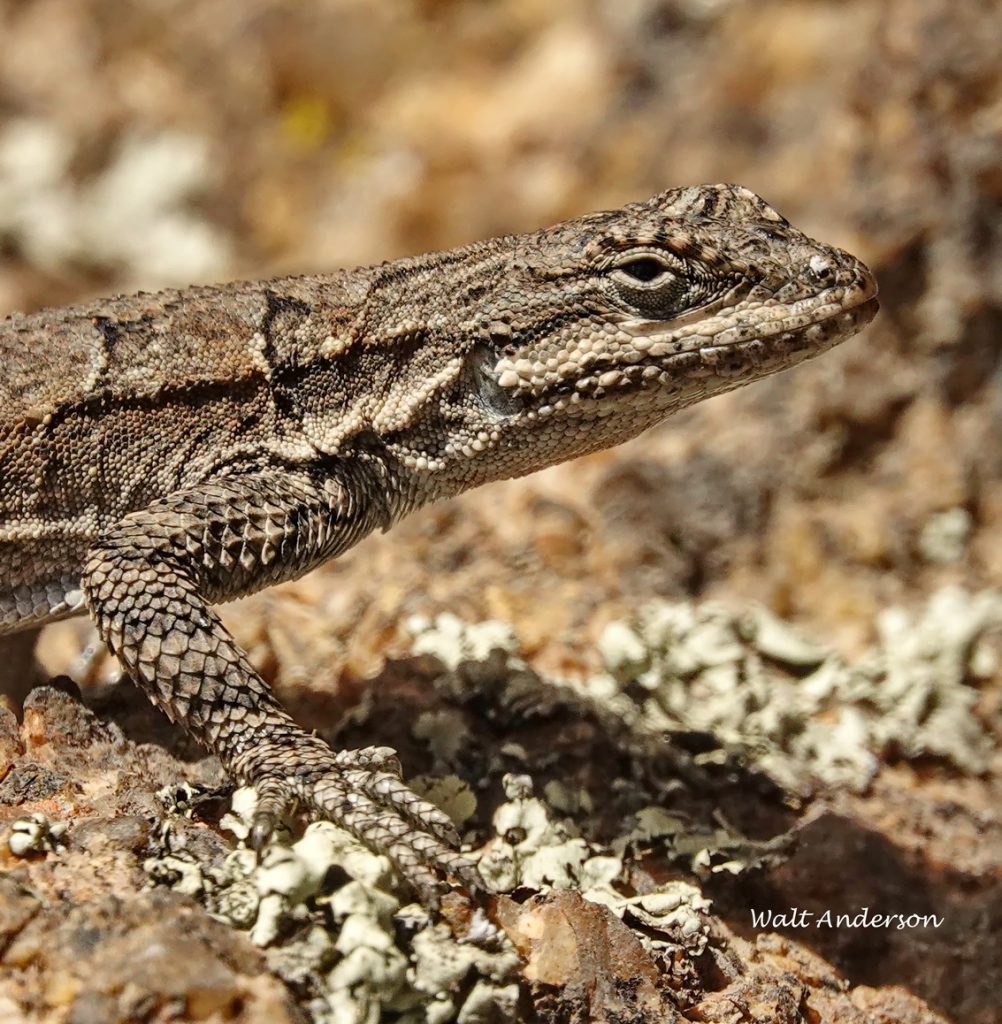
A closer look shows the intricate patterns of keeled scales and small, granular ones. Delicate lines on the head account for the name “ornate,” though I think the tapestry of scales over the entire body is just stunning. Sadly for us, you almost need this kind of close-up to become aware of it, as mostly we just glimpse a dark little lizard disappearing into the shadows when it is alarmed by our relatively enormous bodies.
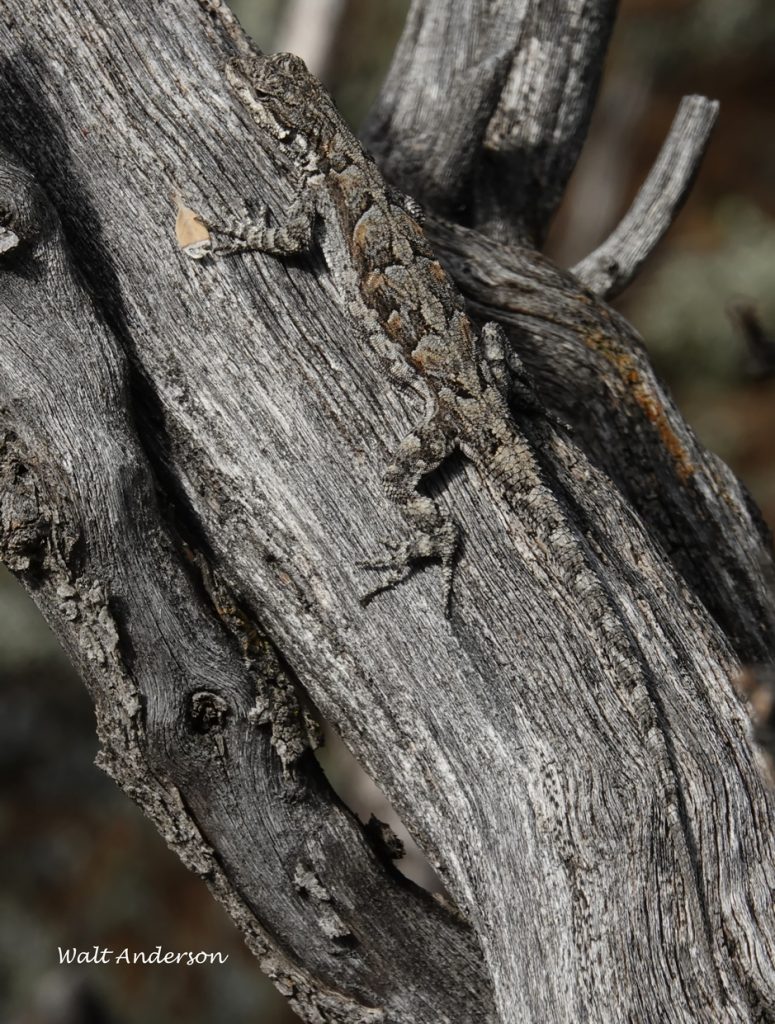
In fact, we might not notice the little lizard at all if it doesn’t move, as those ornate patterns provide outstanding camouflage. Crypsis is an effective anti-predator strategy, though if the lizard senses danger, it may quickly zip around behind the tree trunk or into a crack in the rocks. Freeze first; flee when you have to.
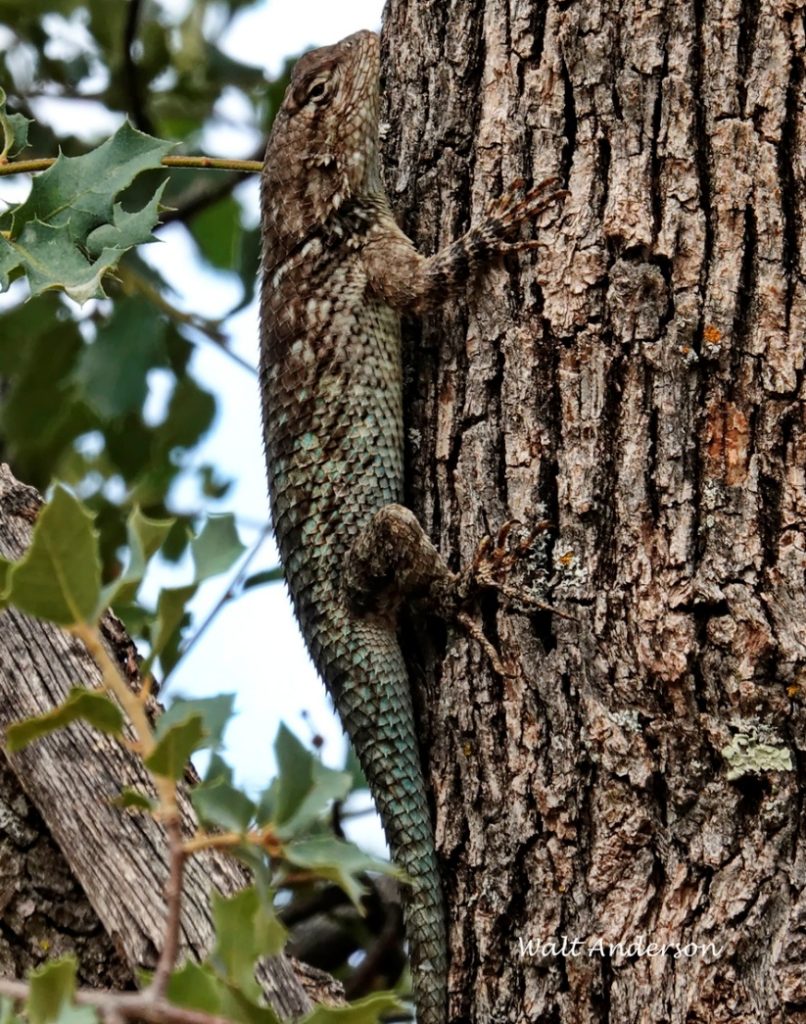
The large Clark’s Spiny Lizard is one of the potential predators on the diminutive Ornate Tree Lizard. Both species are members of the large family called Phrynosomatidae (it’s easier to pronounce than it looks; try “fry-no-so-mat-id-ee”). There are 9 genera and some 130 species in this New World family, including the chunky and also cryptic horned lizards.
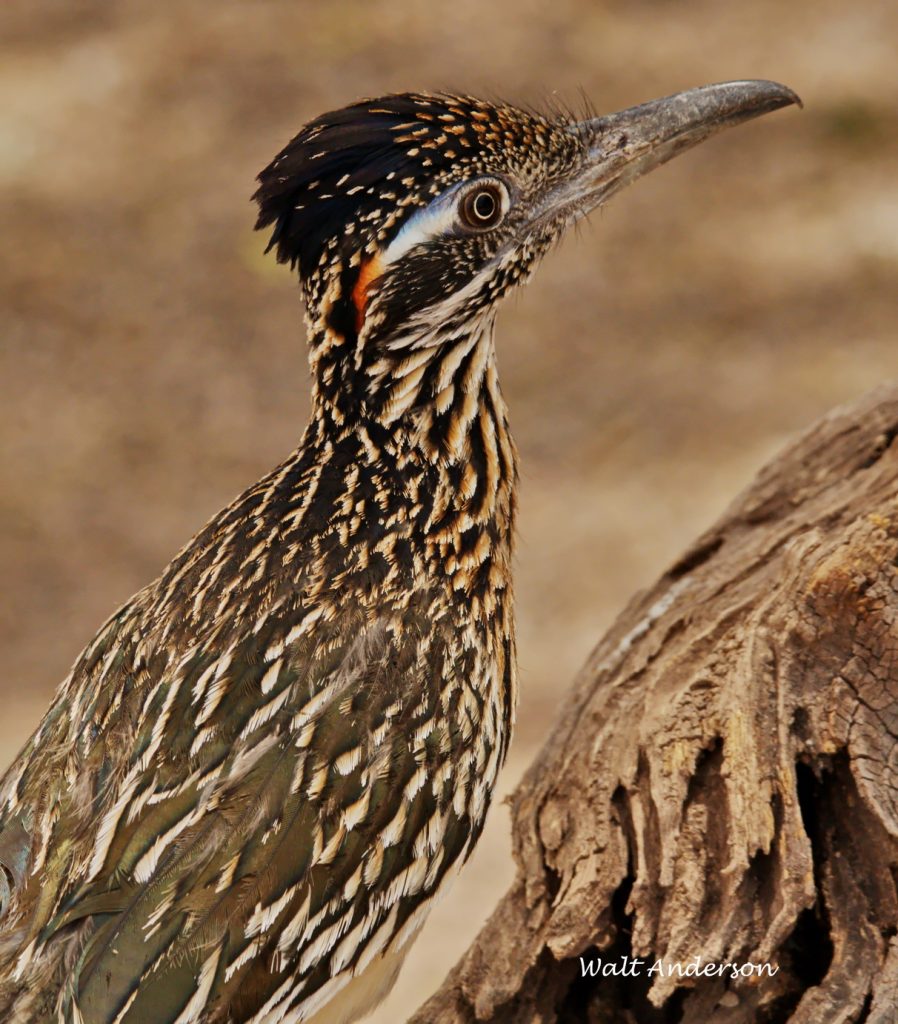
Lots of critters love to add lizards to their innards, including the infamous roadrunner (when he’s not having to deal with a homicidal coyote).
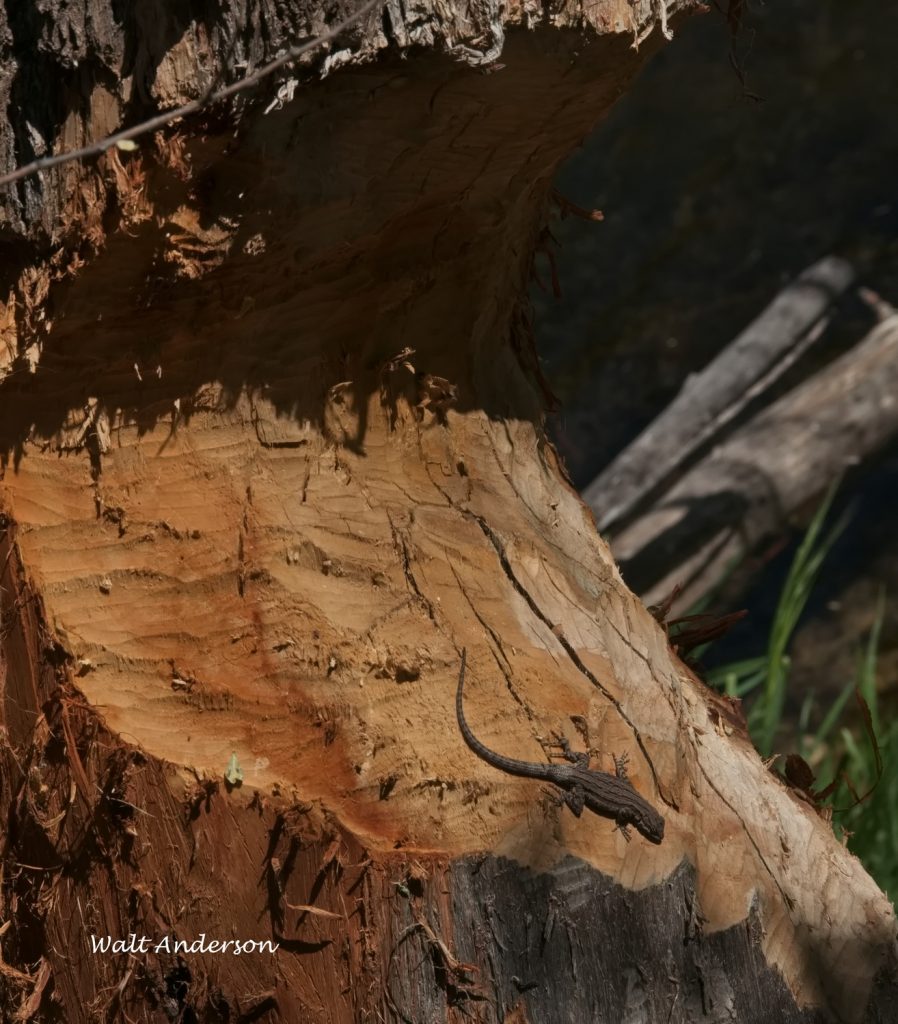
I guess beavers would have to be added to the enemy list when they cut down the very trees the lizards hang out in. Of course, the beavers mean no harm to the lizards, who are simply collateral damage.
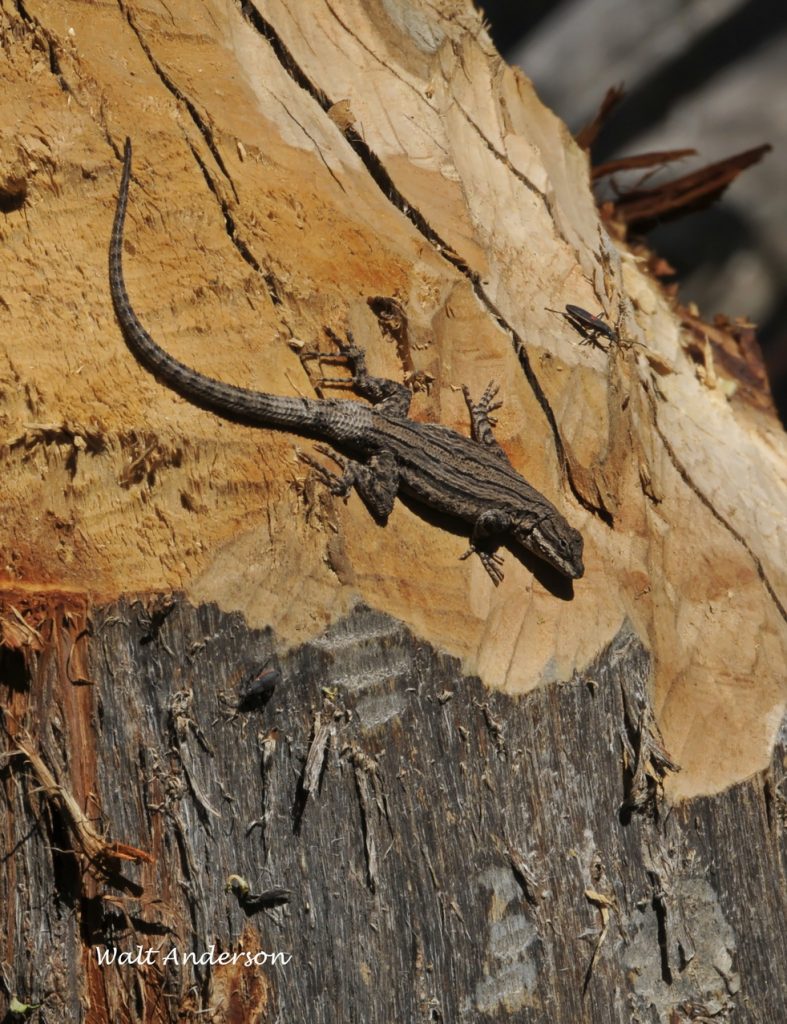
Let’s zoom in on that lizard. Is it really an Ornate Tree? Where are the blotches on the back? Well, it turns out that there is considerable variability both within and between populations. Scientists have described about 9 races, but there is some arbitrariness in that level of classification. This lizard along the Upper Verde River has back stripes instead of blotches. You can see that everything else about it fits.
If you look closely, you can see two bugs on the beaver-chiseled tree. They may not realize that the lizard is a sit-and-wait predator that specializes on invertebrates. They can lunge with great speed, and I have seen them leap into the air after insects flying by.
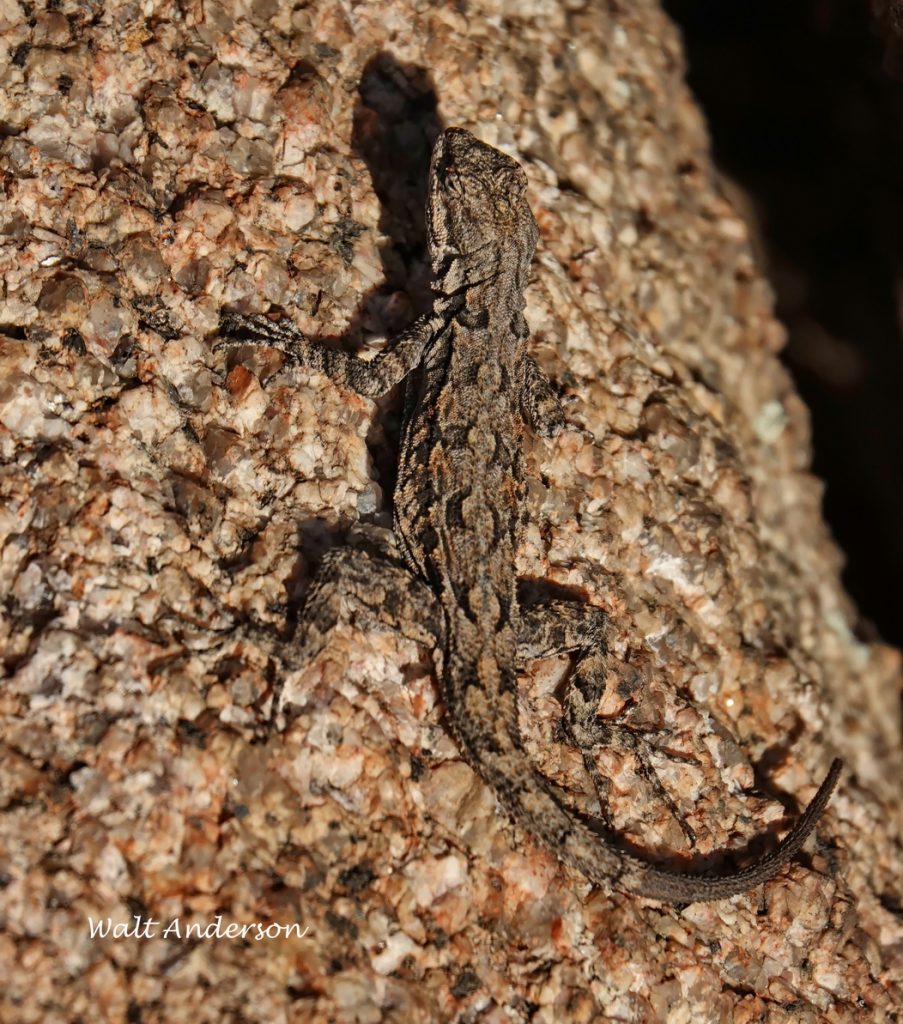
An escape strategy is tail automy, the release of part of the tail along distinct fracture planes when attacked, which may distract the predator and let the lizard escape. This has saved the life of many a lizard (any lizard catcher knows what it’s like to end up with a squiggly tail), but it has metabolic and sometimes even social costs. The tail will regenerate, but it is now boneless—only cartilage—with no new fracture planes in that segment. You can see the regenerated appendage here.
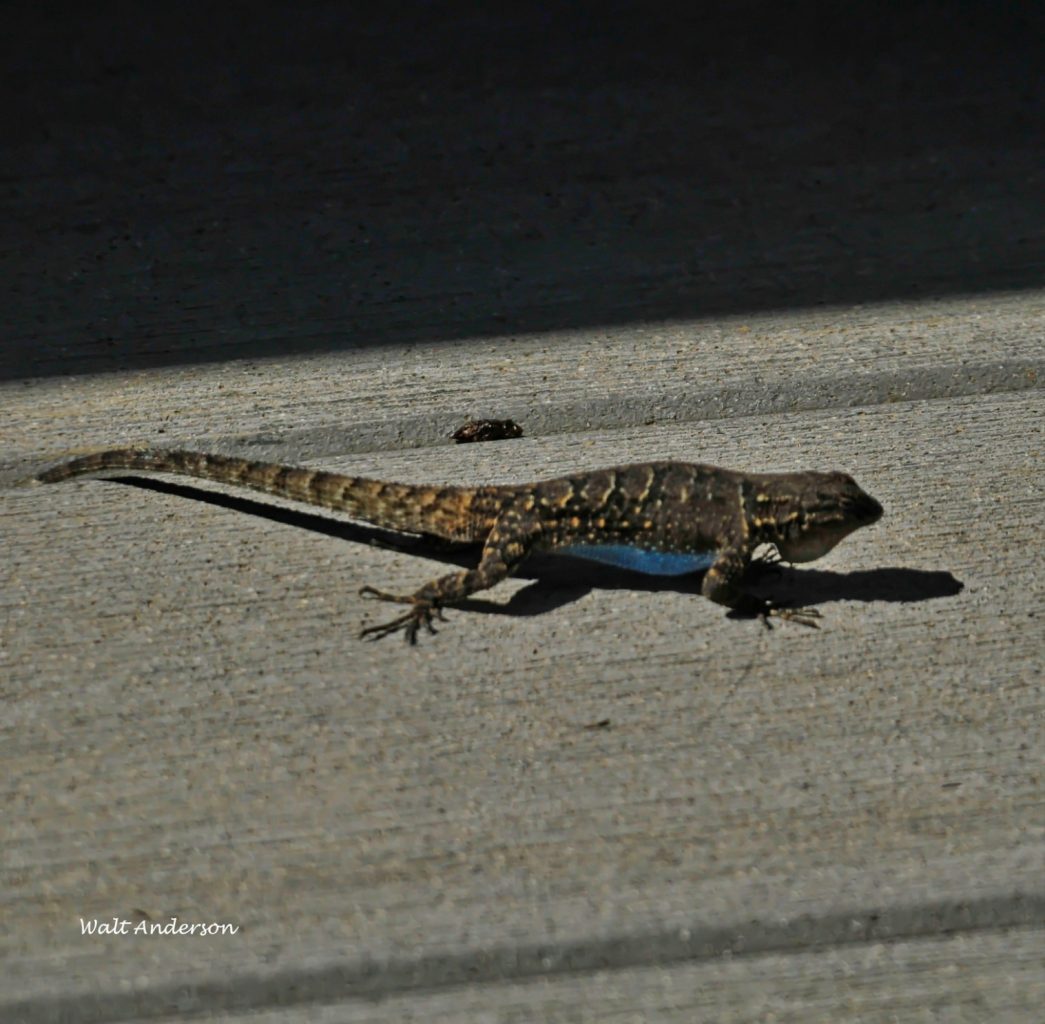
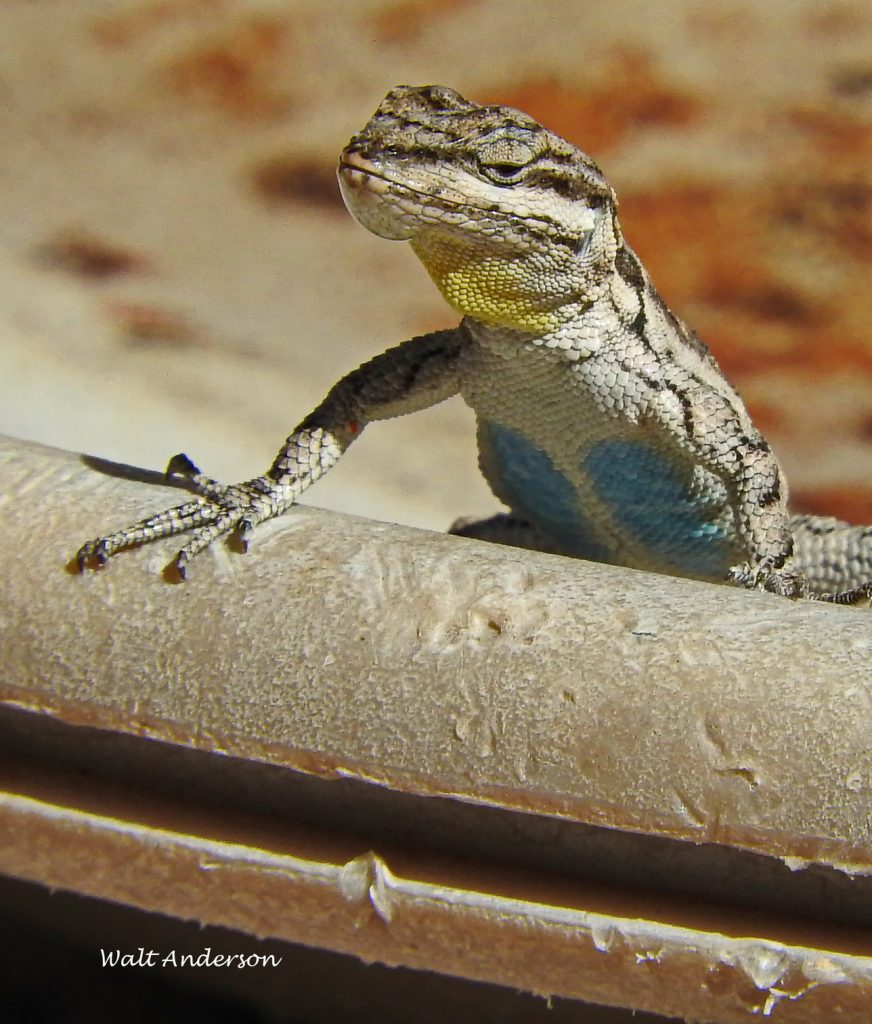
Crypticity is great if you are worried about predators, but when mating season comes each spring, you may need some flashy colors to attract a mate and repel rivals. Like some other lizards, adult males have broad, blue belly patches that are displayed during bouts of vigorous push-ups. These may be accompanied by head-bobs and lateral displays, as competing males size each other up. Full-show displays can escalate into aggressive fighting if neither is intimidated by the other’s appearances. During the aggressive displays, the lizard may turn much darker, just as it can do on cool days to improve solar collection. Interestingly, the Spanish word for “lizard” is “lagartija,” which means “push-ups,” as in calisthenics.
Only males have blue bellies, but both sexes can have colored throats. Male throat or dewlap patches can be blue, blue-green, yellow, or orange, while female patches can be orange, yellow, or yellow-green (no blues). Immature lizards have pale colors like the females, perhaps to avoid aggression by adult males. Across the range of this species, there are nine color types identified.
Some of the races during mating season can indeed be racy. Certain populations appear to have multiple male genders, depending a lot on the balance of progesterone and testosterone during juvenile development. This results in different throat color patterns in adults, with one type being aggressively territorial and dominant to the other type, which is more likely to abandon territory in dry conditions and become nomadic. A yellow throat with an enclosed bluish patch is apparently the sexiest, and females seem to prefer to mate with those dominant males—the bigger the blue patch, the more appealing the male. These conditions were documented in studies along the Verde River in Arizona. Elsewhere, the social structure can be very different. In fact, females can have different throat colors themselves, with each type preferring the throat color of a different type of male! Yes, appearances can be both revealing and deceiving!
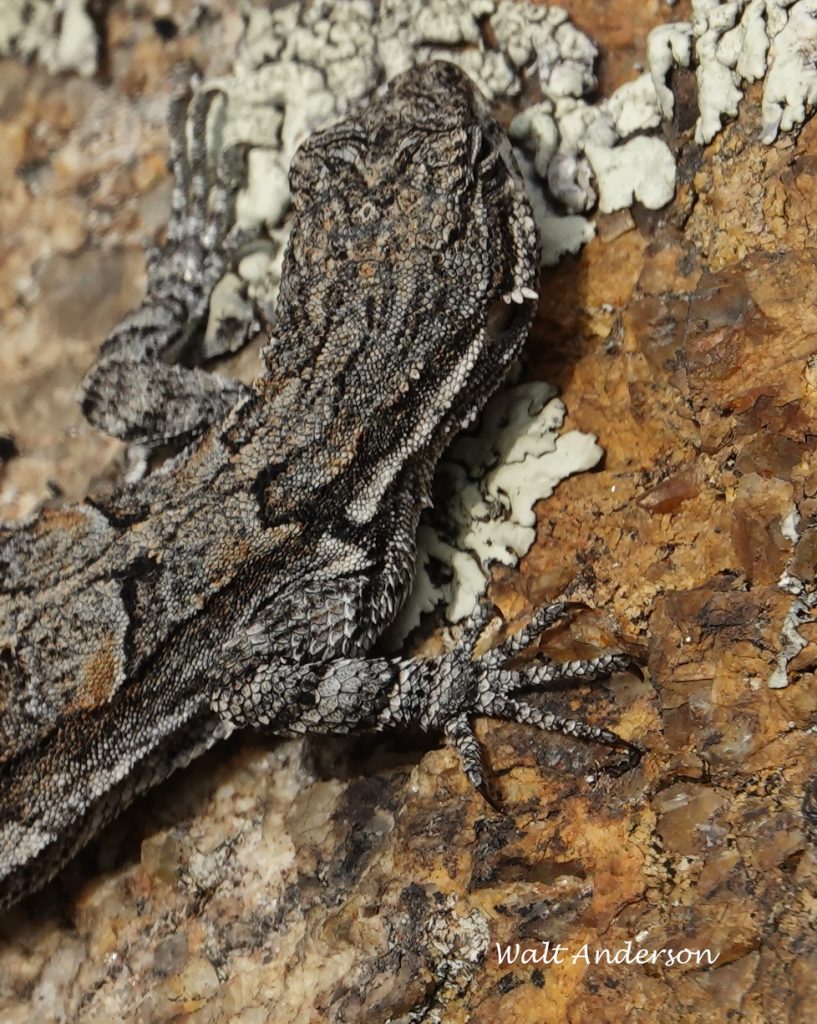
We judge appearances with our eyes, as most creatures do, but many lizards have a “third eye,” the parietal or pineal eye, which you can see here as a white dot in the middle of the head back a bit from the lateral eyes. It has a lens, cornea, and a retina of sorts, though it can’t form an image; it is sensitive to light and heat. It can detect motion like that of an approaching predator (it may have “seen” me that way), but it is mainly involved with circadian rhythms and control of hormone production. The lizard receives signals that inform it to get out of the sun before getting too hot, for example.
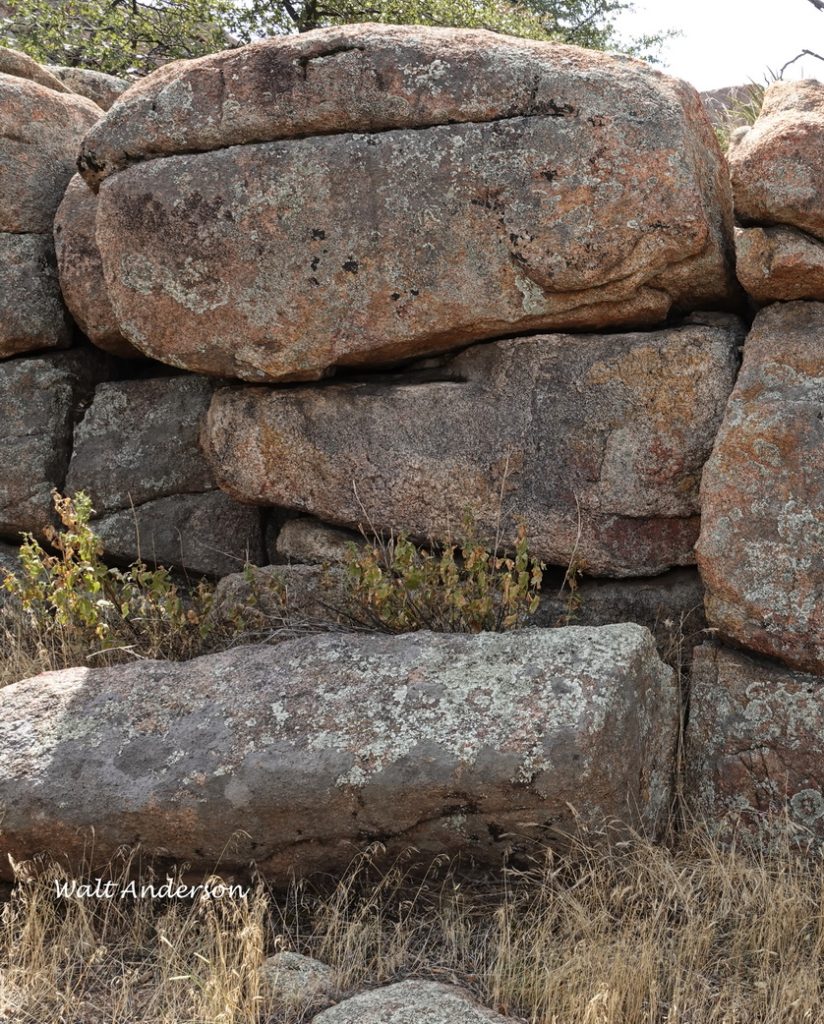
A variety of microhabitats, from moist to dry, cool to warm, makes this perfect lizard habitat. Escape cover is always available too. Lizards are ectothermic, meaning they rely on external temperatures to function optimally. That pineal eye helps them do that. We don’t think their reptilian brain is capable of sophisticated judgments; OUR reptilian brain (the brain stem and cerebellum) can’t do those either.
Incidentally, the word “pineal” is derived from “pine,” since the gland looks a bit like a tiny pinecone.
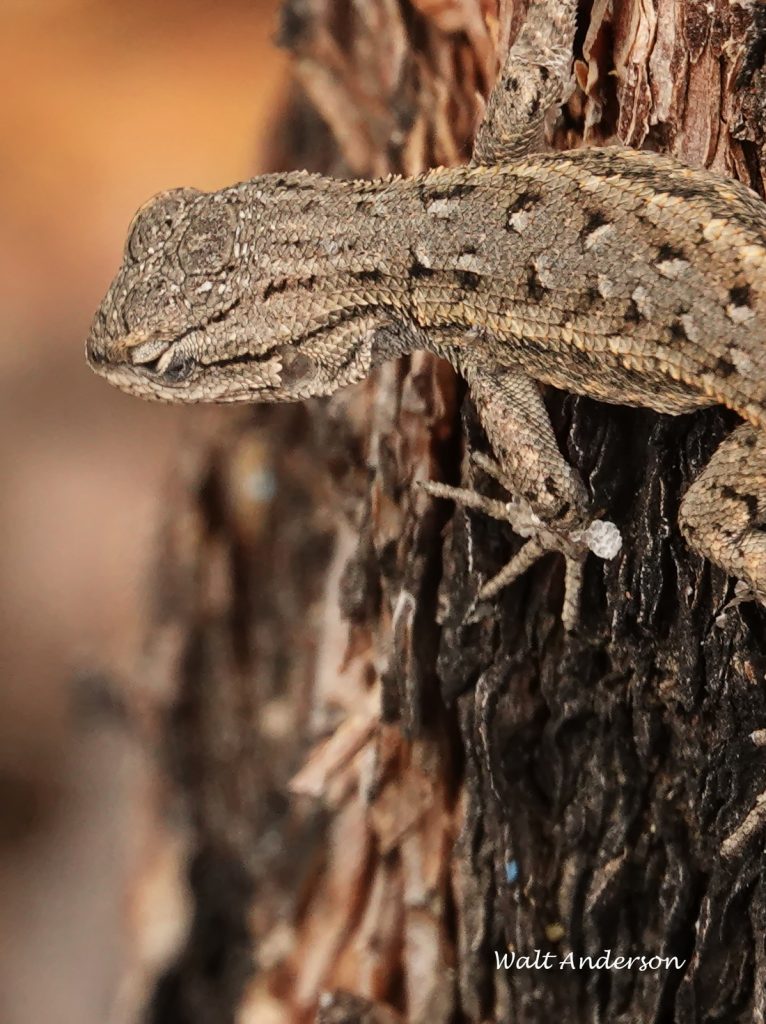
Ornate Tree Lizards lay anywhere from 2 – 16 eggs in a clutch, several per year. There is no parental care, and baby lizards (like this one with its disproportionately large head) have to fend for themselves from the start. Mortality is high, and it is a rare tree lizard that reaches the age of three years. Their populations fluctuate a lot depending on the weather: peaking in moist years with plentiful food, tanking in years of drought, like this one. An individual’s growth rate is also determined by temperatures and food supply. They molt (or shed) repeatedly as they grow, and you can see a few shed scales on the forelimb here.
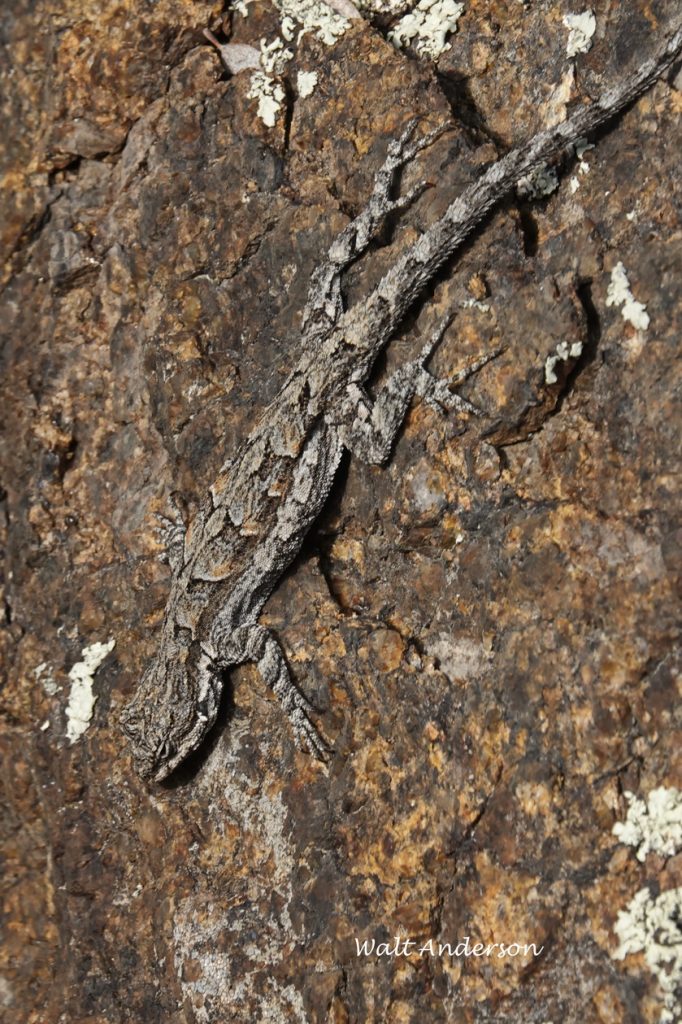
Ectotherms like lizards can’t generate body heat like we endotherms do, so they are at the mercy of the environment, though moving among microhabitats helps. When it simply gets too cold, tree lizards enter brumation (the ectotherm equivalent of hibernation). They simply can’t function normally. They may congregate with others in their brumation chambers (are they bromates or simply roommates?). Warm days may bring them out to do a little sun-basking. When it gets unbearably hot, they estivate, which also shuts down activity centers to a lower level.
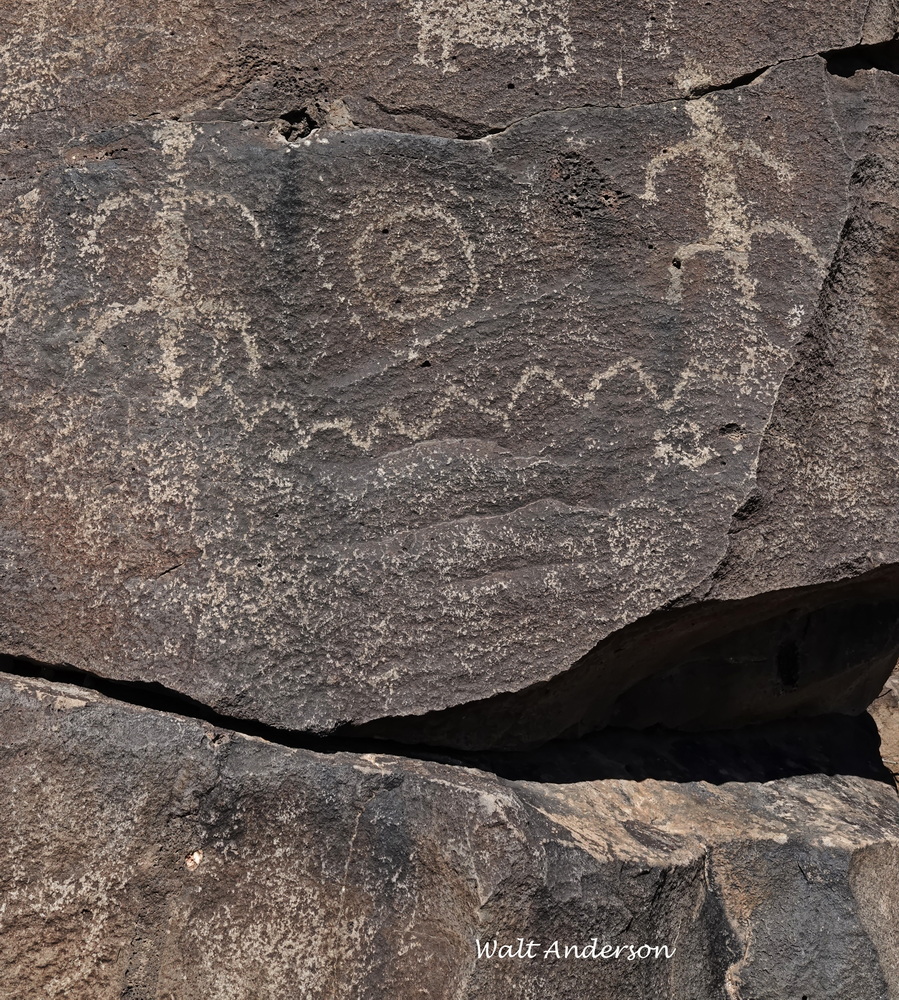
Lizards are frequent subjects in Native American petroglyphs. They are liminal creatures, considered messengers between the human and spiritual realms. Because of their abilities to regenerate their tails and shed their skins, they are symbols of transformation, renewal.
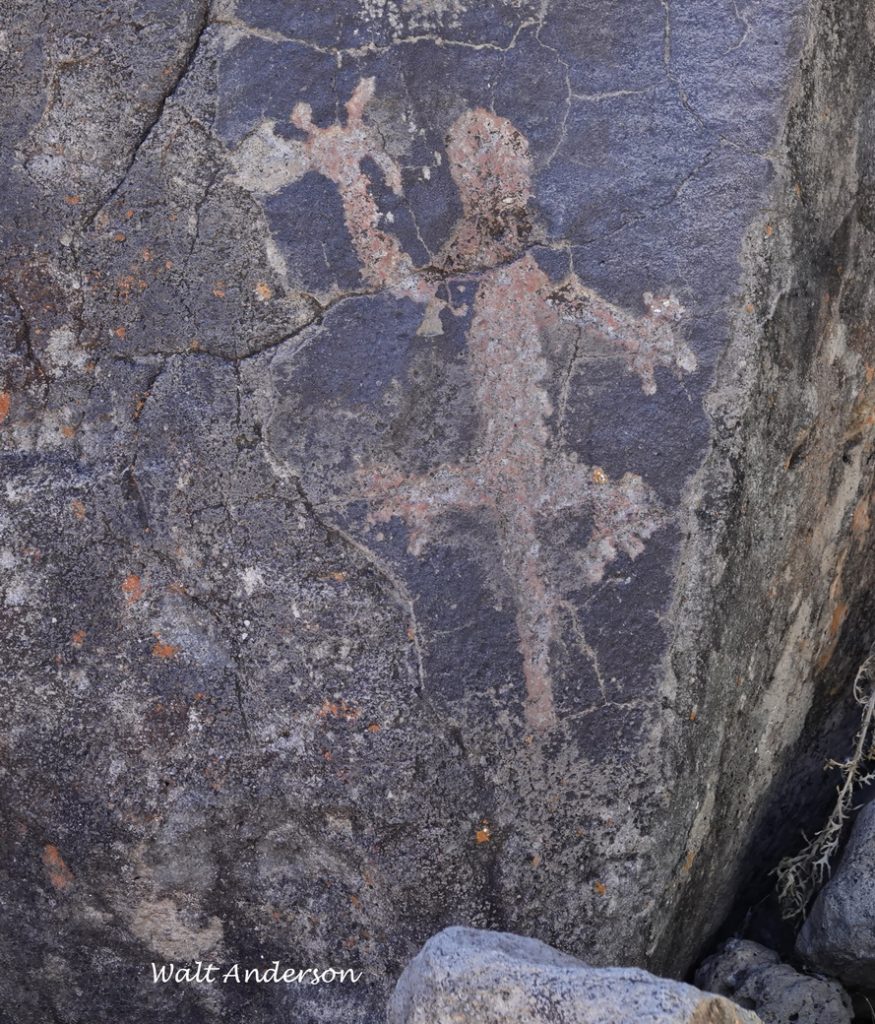
This petroglyph even demonstrates lizard locomotion. They seem to defy gravity as they scurry around in the trees or boulders, sometimes upside down. This image received a coating of pigment too.
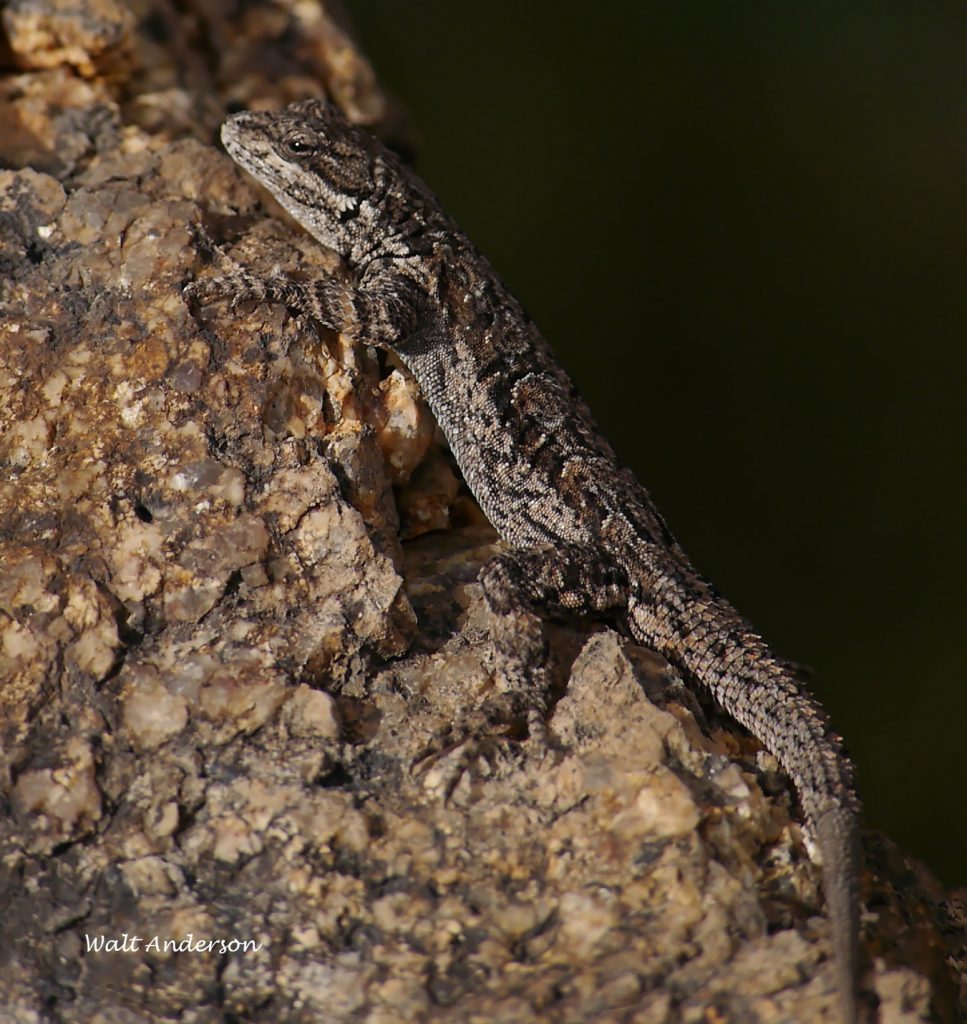
Arizona has 53 species of lizards, 5 found nowhere else. It is a fantastic place to discover the diversity of this ancient group of animals. The little Ornate Tree Lizard is one of the most ubiquitous, so if you are in Arizona other than during cold winter weather, you should see them. Take time to really look at them and appreciate just what “lizard” means.
Think of life as a grand symphony. We may be the kettle drums, given all the noise we make. But tune us out now and then. Listen to the myriads of instruments, all the life around us, large and small. As we learn to pick out each of the many voices, we have gained kinship with and respect for the incredible diversity of living things, something we have lost in the relentless march of “civilization.” Let’s truly pay attention. It’s worth it!