Among Friends. Oh, Savannah, by Walt Anderson
As I approach a central Arizona wetland on a fine fall day, my spirits high as I anticipate finding some birds—any birds—for good photos, I hear rustling in the dried sunflower stalks and assorted weeds. Motion here, stirring there. A tiny, striped bird darts ten feet through the vegetation and drops to the ground. I step forward slowly. Three little brown jobs shoot in different directions, then disappear. All right—sparrows, but who are you?
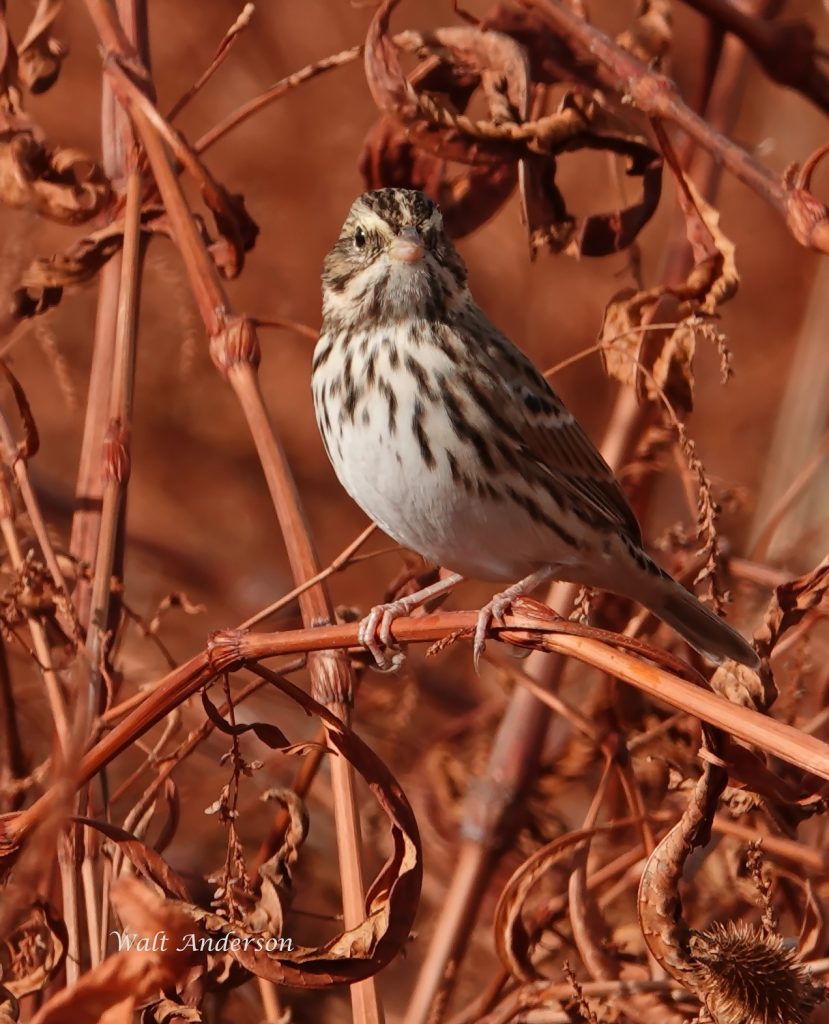
Clearly, stalking isn’t working. I stand motionless and give a little pishing sound, a technique birders use to tempt some birds to come out in the open. And one does! Tiny, pink bill; streaked breast; short, notched tail; yellow brow mark. Aha, a Savannah Sparrow. Now I just need it to stay curious long enough for me to frame a decent photo. I softly hum: “Oh, Savannah, now don’t you fly from me!” . . . Stephen Foster would be proud, for his tune works!
Buenos Aires refuge is sparrow heaven. Sparrows can be an identification challenge, and there is enough variation even within some of the species that you may have to take geography and habitat into account as you work out an identity. Some folks throw up their hands and say “Spare me the sparrows!” But as is so often the case in nature, having patience, paying close attention, and doing the work (not resorting to a quick ID using Merlin) can yield very satisfying rewards.
There is beauty in subtlety. When I get a good look at a sparrow, I feel an urge to paint one. My palette will be simple: earth colors like Van Dyke Brown, Raw Umber, Burnt Sienna, Payne’s Gray, all organized as stripes, blotches, and washes against white. Oh, there are some showy sparrows, and I love them too, but getting familiar with the cryptic ones—Savannah, Vesper, Song, Fox, Grasshopper, Brewer’s, and Lincoln’s—gives a gratifying sense of achievement.
No matter where you are on the spectrum of sparrow appreciation, I think you will find the following images and words at least a step forward. Oh, Savannah!
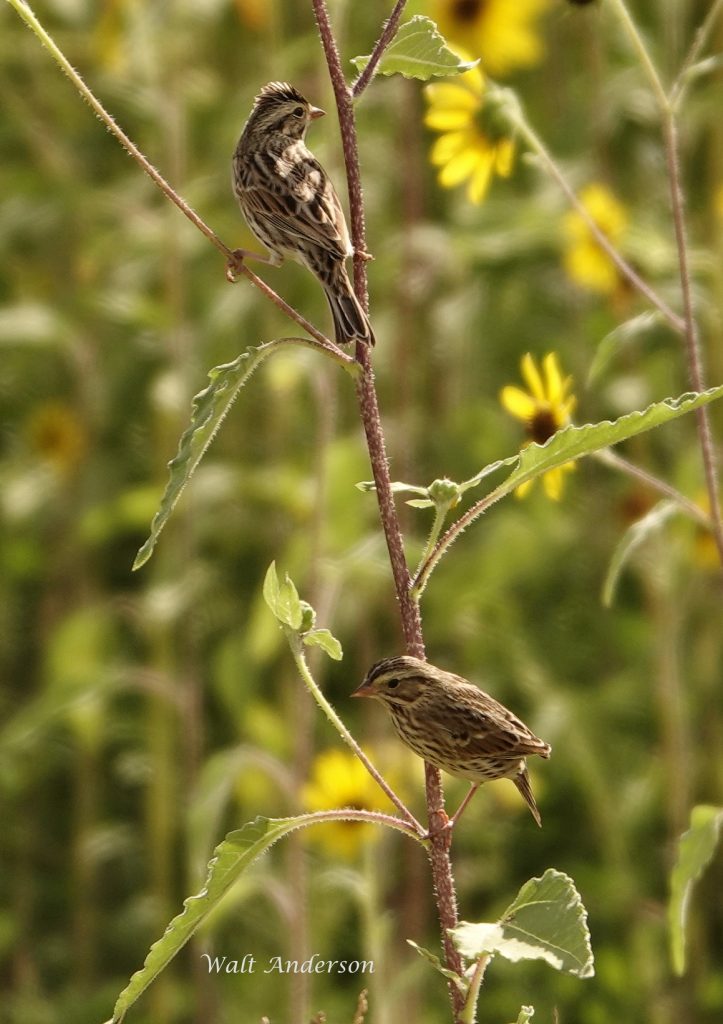
Though Savannah Sparrows don’t breed in southern Arizona, they return as early as mid- to late-August to spend the winter. They are often found amidst the sunflower stalks or other weedy places on the refuge, such as headquarters, Triangle Pond (300 reported there in November 2021!), Aguirre Lake, and Arivaca Cienega.
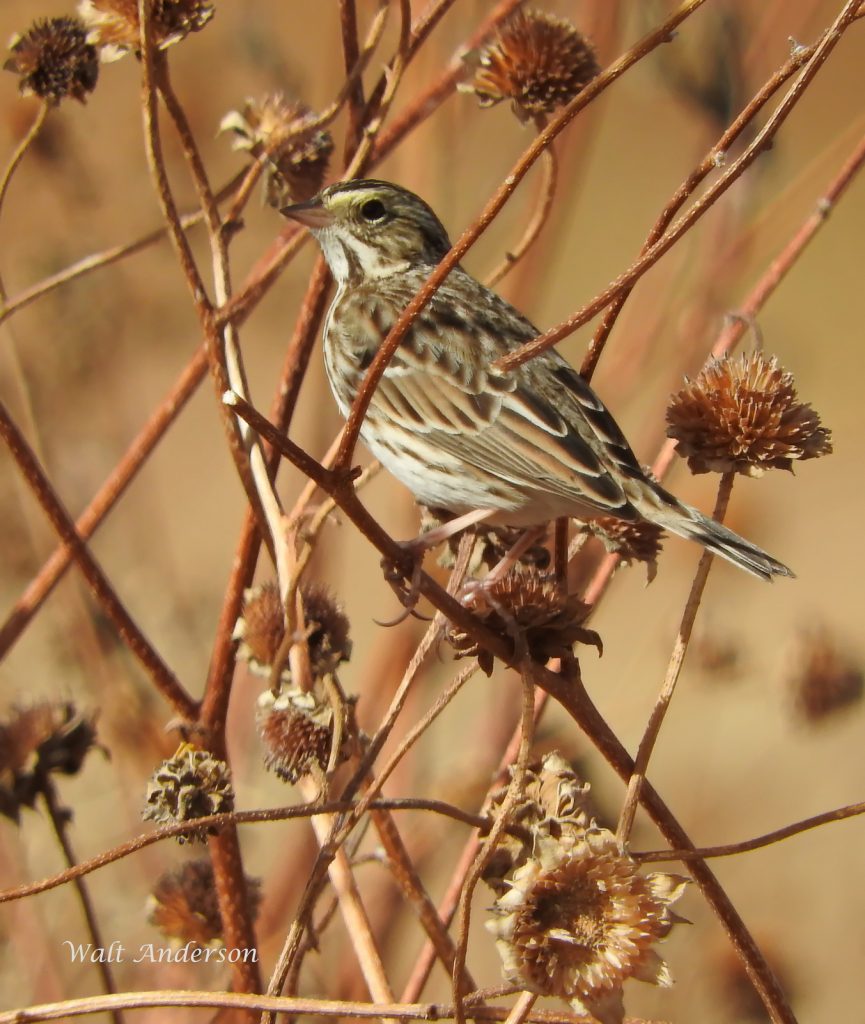
When the sunflowers dry out, the birds still find them to be satisfactory cover, and the seeds contain plenty of nutrition. They may pop up to check you out, but most of their time is spent foraging for seeds on the ground, where they are safer from potential predators.
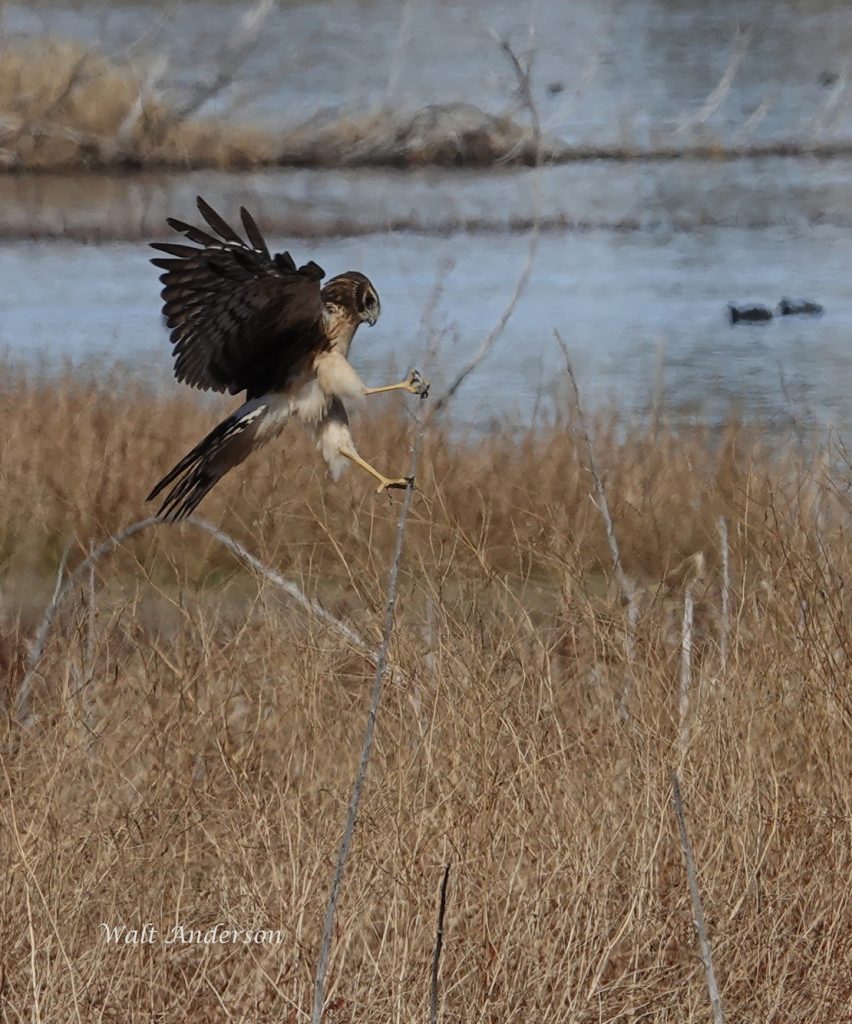
Yes, though their modest striped plumage is fairly cryptic, they need to be on the watch for both aerial predators, like this Northern Harrier, as well as any hungry critter approaching on the ground.
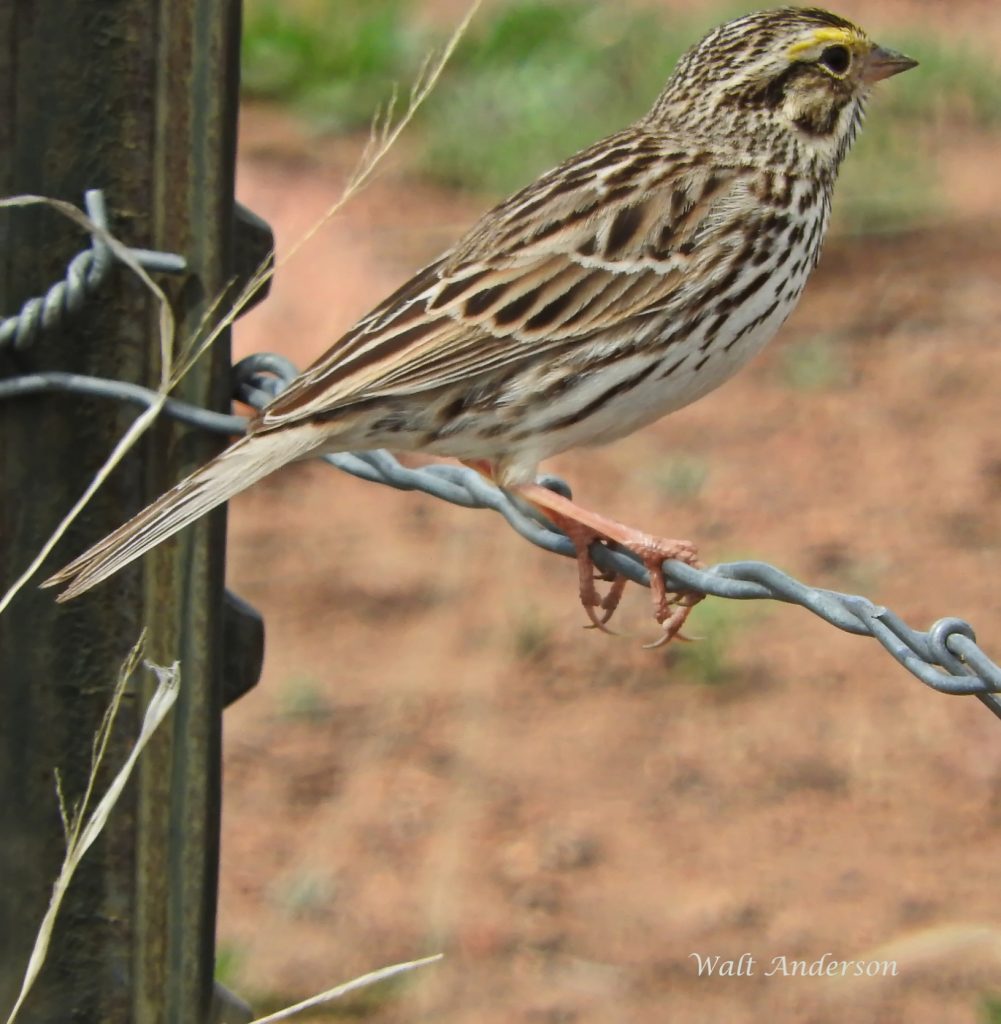
I’ve already given a basic description of the species, but here is another view. It’s a small, streaky sparrow with a short, notched tail; yellow just behind the pink bill (it’s usually part of the eyestripe rather than just the spot behind the bill, the lores); pink legs; and visible eyering (though not dominating the face).
The fence is an optional field mark.
Head on, the bird shows a narrow white central crown stripe and often a chest spot, a stickpin. The Song Sparrow often has the latter, so don’t rely on that alone. Notice that the streaking is crisp, well defined.
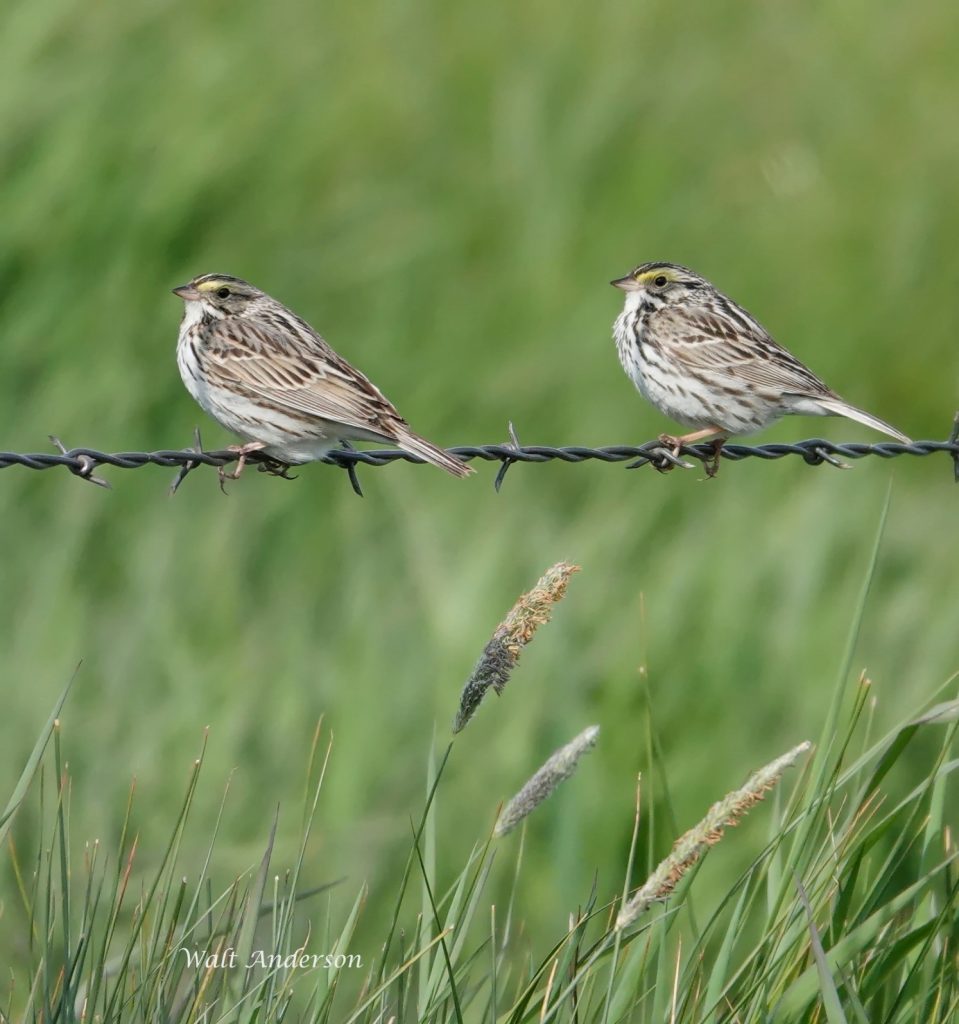
The dark centers of back feathers are usually lined up to create two parallel black stripes separated by white. These are classic Savannah Sparrows on the breeding grounds near Summer Lake, Oregon. While fences are not a part of their long evolutionary history, they suffice as convenient perches. These birds like wide-open spaces. Conversion of shrublands to hayfields has probably benefited these sparrows in the West, as did logging off the forests in the East, though human actions, including abandonment of cleared farms, have also reduced habitat in many places.
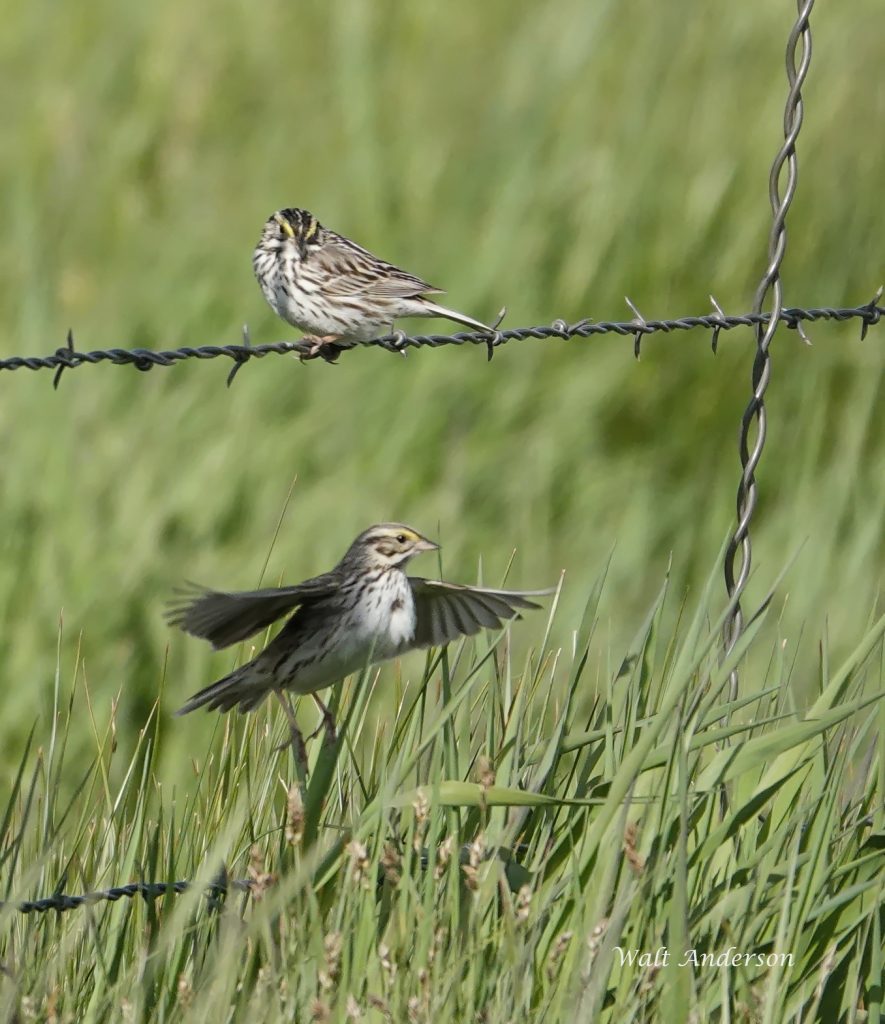
On the breeding grounds, which include much of central and northern North America, males defend territories, delineated by song, flight displays, and actual aggression. Females choose habitat that meets their needs rather than picking out the most studly males.
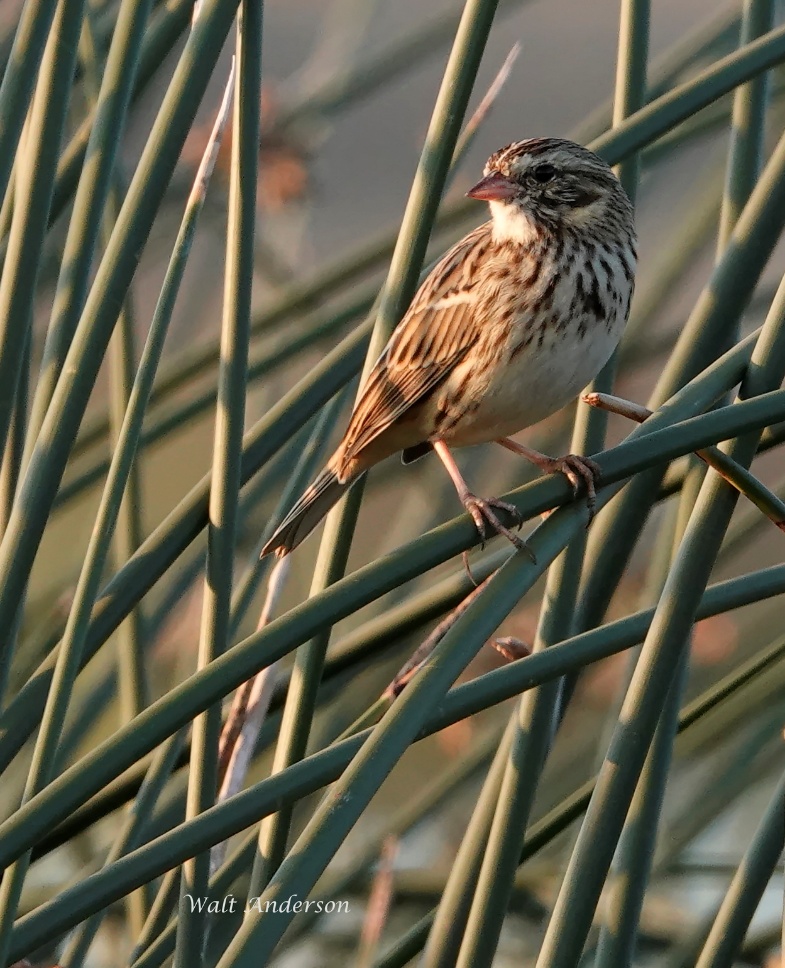
In some cases, multiple females will choose the same male-held territory, and we get polygyny. The first female will often resist the intrusion of another female, and sometimes it works—she forces the male to be monogamous. In other cases, the territory is apparently large enough to support multiple “wives,” and polygyny results. Males will help rear the young in monogamous situations and will usually help the first mate in polygyny, but second mates need to raise the chicks solo. It had better be a productive territory!
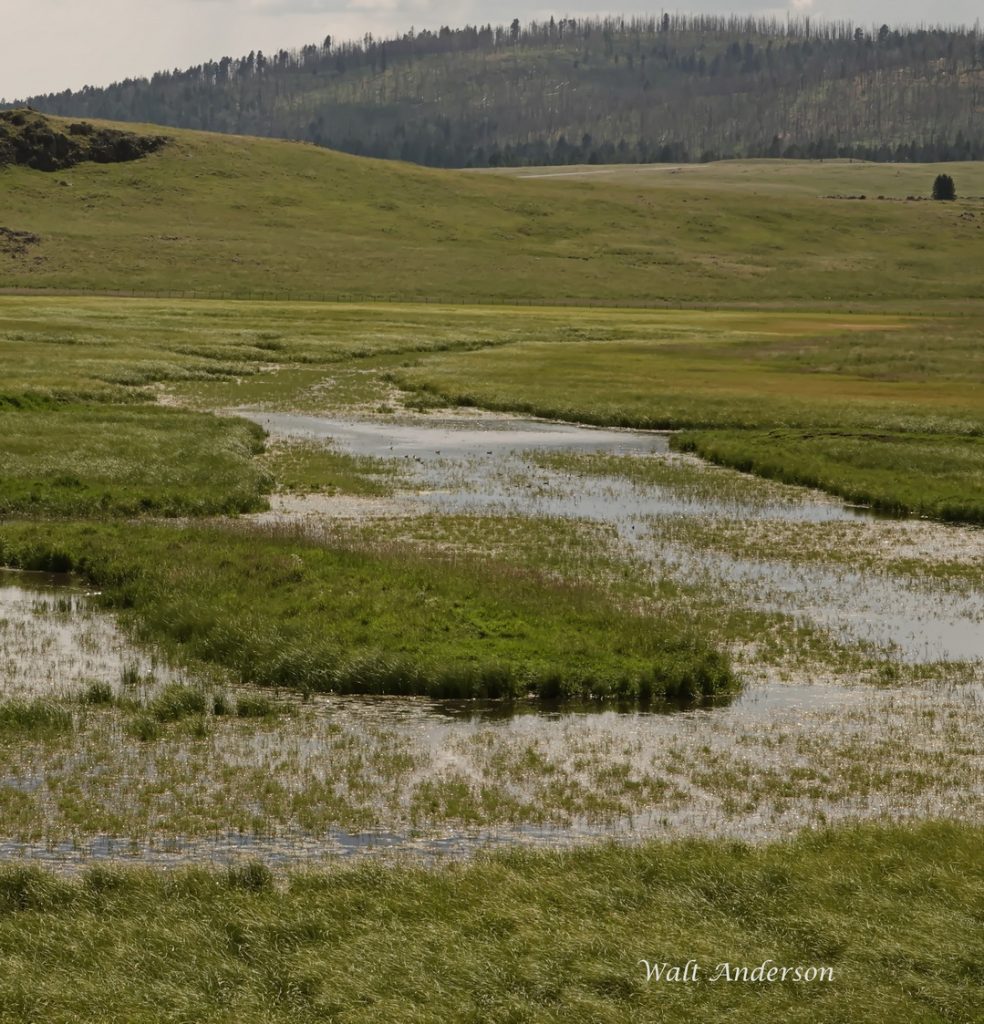
Though Arizona is a primary wintering area for Savannah Sparrows, only a few breed in the state. The high, wet meadows of the White Mountains in eastern Arizona are suitable, as are some of the grassy meadows on the Kaibab Plateau and around Mormon Lake in a good, wet year.
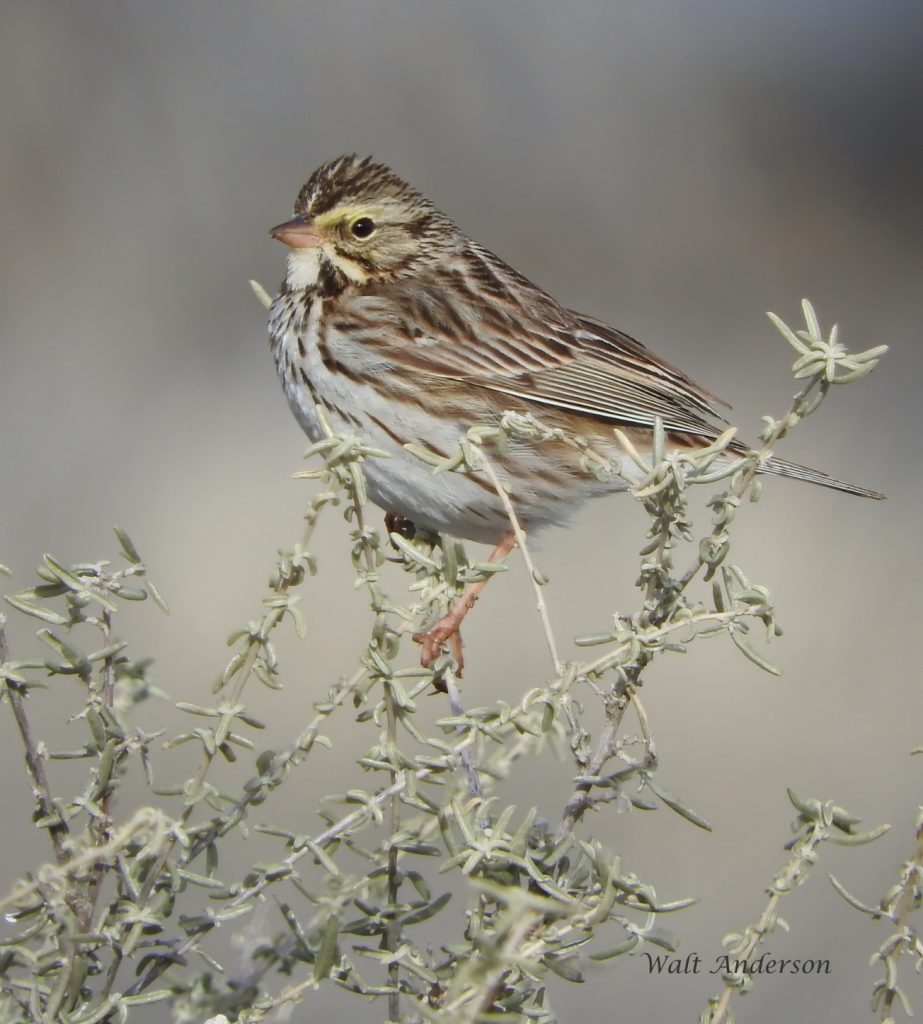
Well, why is this called “Savannah Sparrow”? Alexander Wilson in 1811 described a specimen near Savannah, Georgia, giving it this name, though he was apparently unaware of a specimen collected in Alaska a couple decades earlier on Captain Cook’s third voyage. That bird was named Emberiza sandwichensis for Sandwich Sound (now Prince William Sound) in Alaska. This raised some hackles among ornithologists, who didn’t like the possible association with the Sandwich Islands (now called Hawaii). Nor did it appeal to those who couldn’t imagine putting the carcass of this tiny bird between two slices of bread.
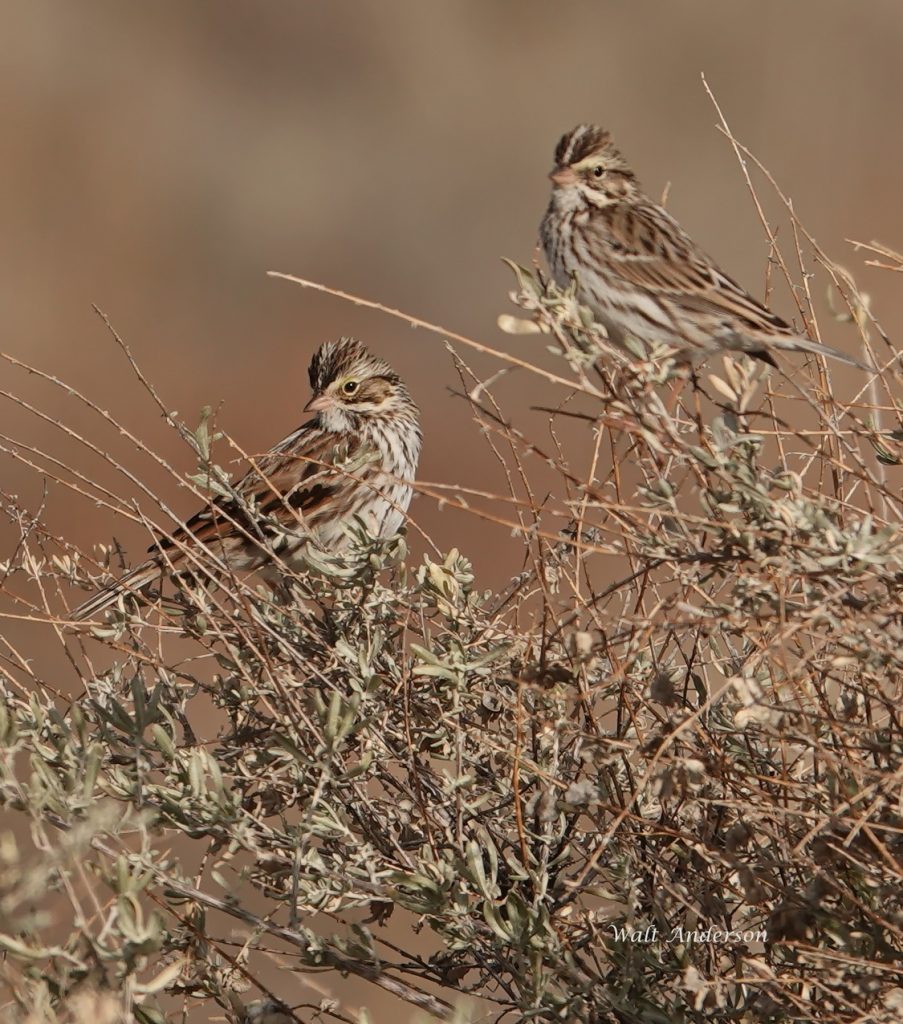
Ultimately, rules of priority kept “sandwich” in the species name, and the bird became known as the Savannah Sparrow, Passerculussandwichensis. Though the common name referred to a city, some folks assume that it was named for a habitat type, the savannah. However, most savannahs have scattered trees, whereas the Savannah Sparrow prefers open country—grasslands, marshes, dunes, ag fields.
It’s unfortunate that its common name reflects just a geographic place, among the thousands where the species occurs. At least it’s not called the Sandwich Sparrow!
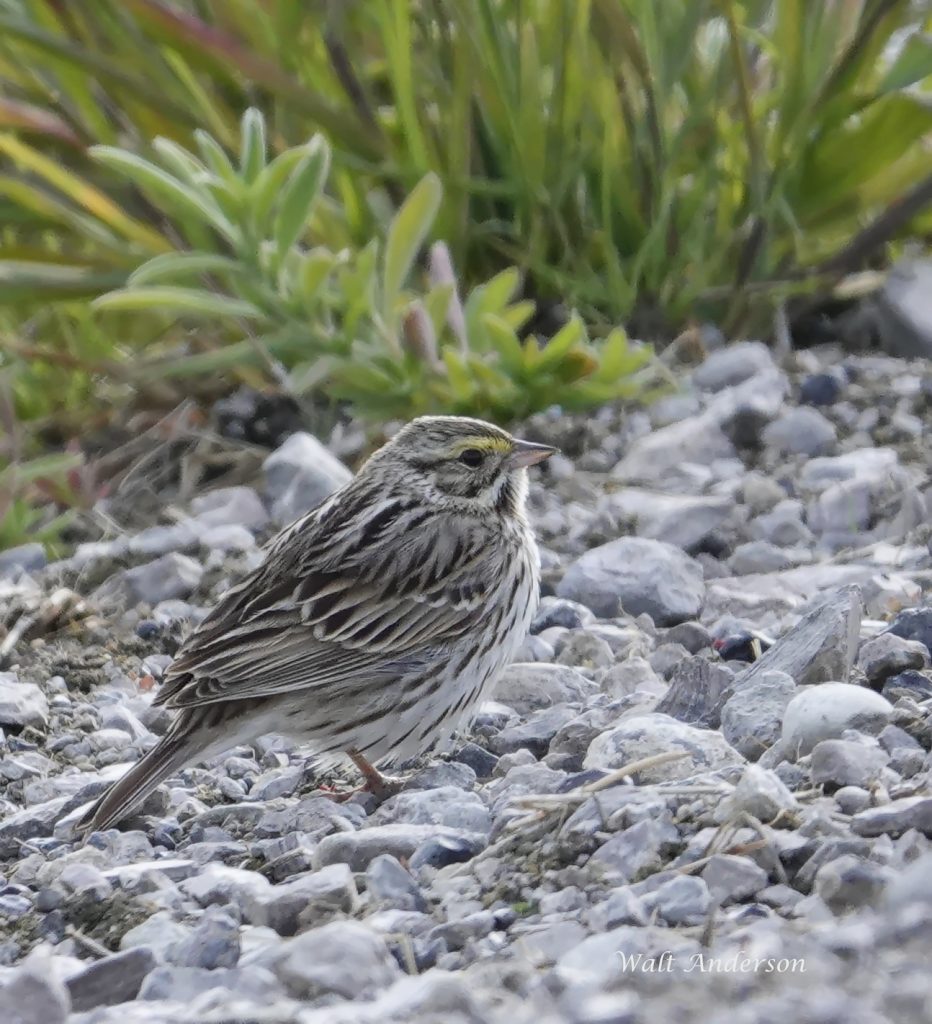
The most common wintering Savannah Sparrow in Arizona is the nevadensis race, which thrives in the Great Basin north of this state. It’s a pale bird with little yellow on the brow. Almost 30 subspecies have been described, with a recent compromise being 17, However, within a single race, bill size may vary as much as 20%, so internal variability often is as high as between-population variability. Do races make sense? Or have museum taxonomists projected differences in the specimens they looked at beyond what is biologically reasonable?
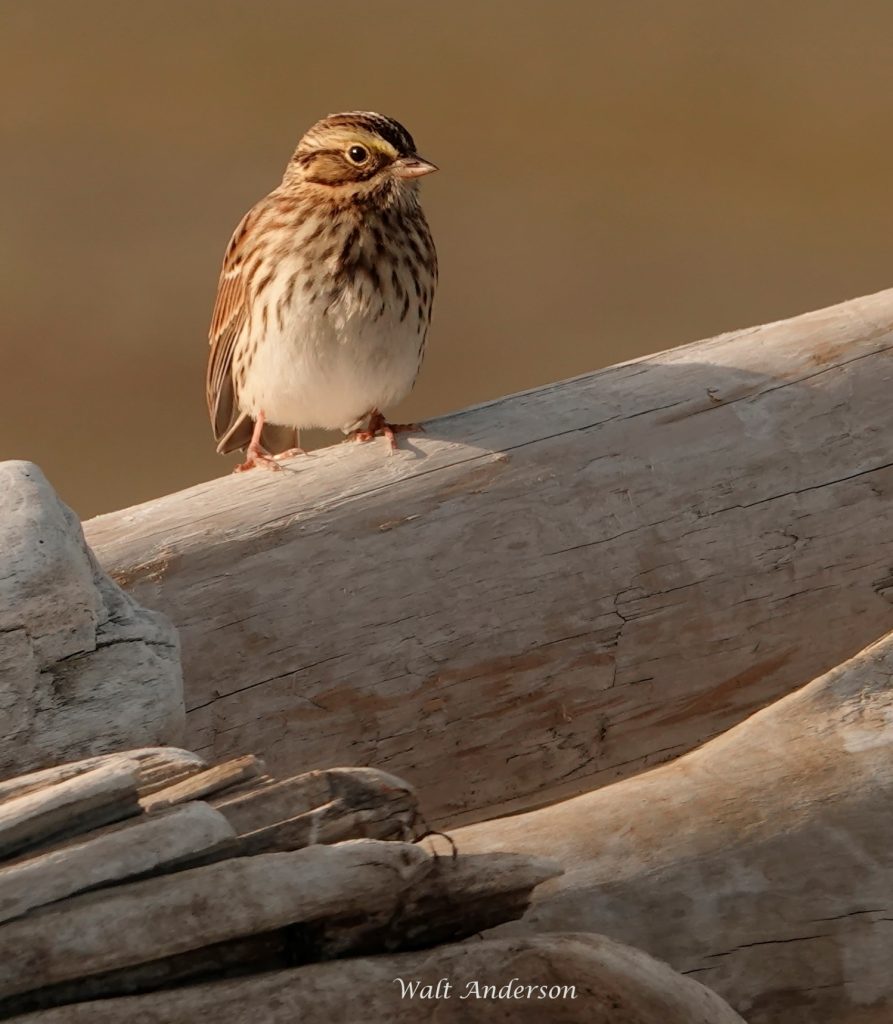
I grew up near the shores of Puget Sound north of Seattle, and the race there is Passerculus sandwichenis brooksi. It is described by sparrow expert, Rick Wright (and he is always Wright), as having “a golden cast to the upperparts” and “heavy blackish streaking above and below.” It’s smaller than most, so its common name is the Dwarf Savannah Sparrow.

It’s at home in salt marshes, as are several other races along the Pacific coast from British Columbia to Baja California. Several of these races have been proposed as distinct species, so splitting may eventually occur if ornithologists concur.
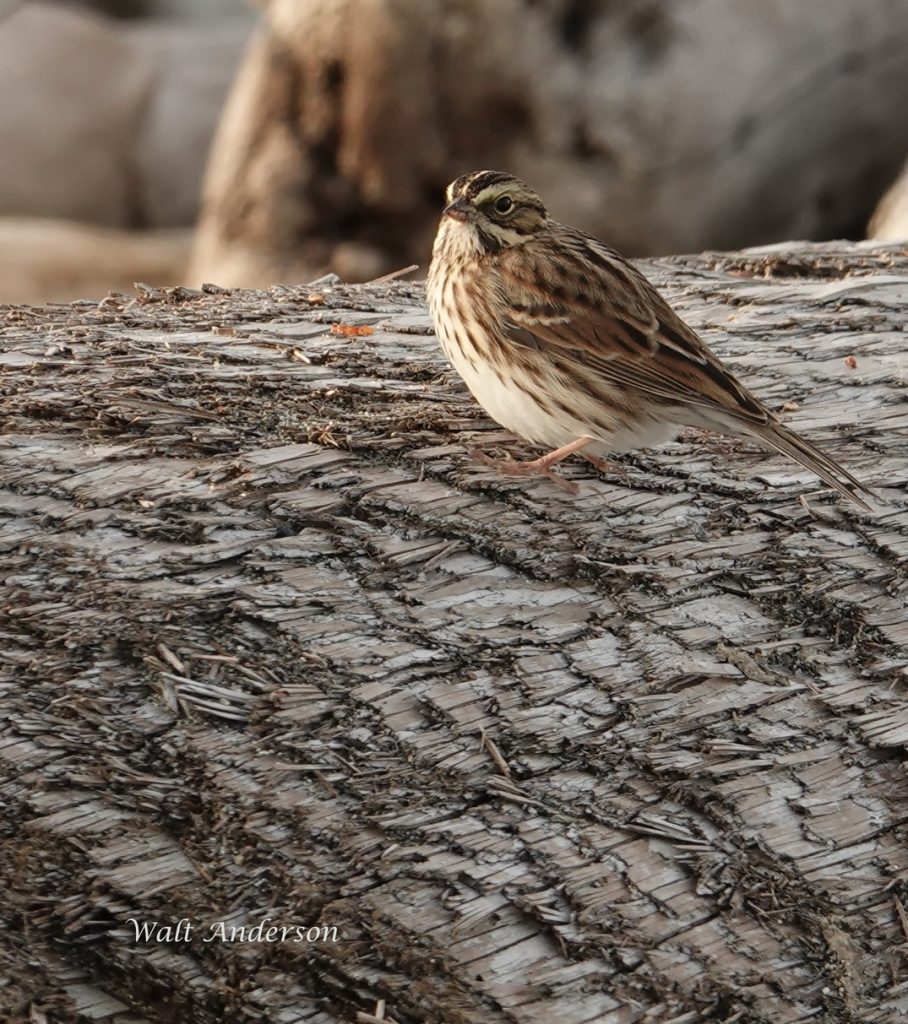
This bird is typical of the Puget Sound race. Some of the coastal races are physiologically capable of drinking salt water.
I recall many visits to the Islas San Benito off the Baja coast, a stopping point on the whale-watching trips to San Ignacio Lagoon that I used to lead. It’s larger than your average Savannah Sparrow, with a thick bill, no yellow on the brow, and dark-brown understreaking. There is no surface water except puddles after a rare rain, and the bird feeds extensively on flies attracted to the colonies of elephant seals that breed there. We may think of sparrows as seed-eaters, but most Savannahs are carnivorous (insects and other invertebrates) during the breeding season and as long as insects are available.
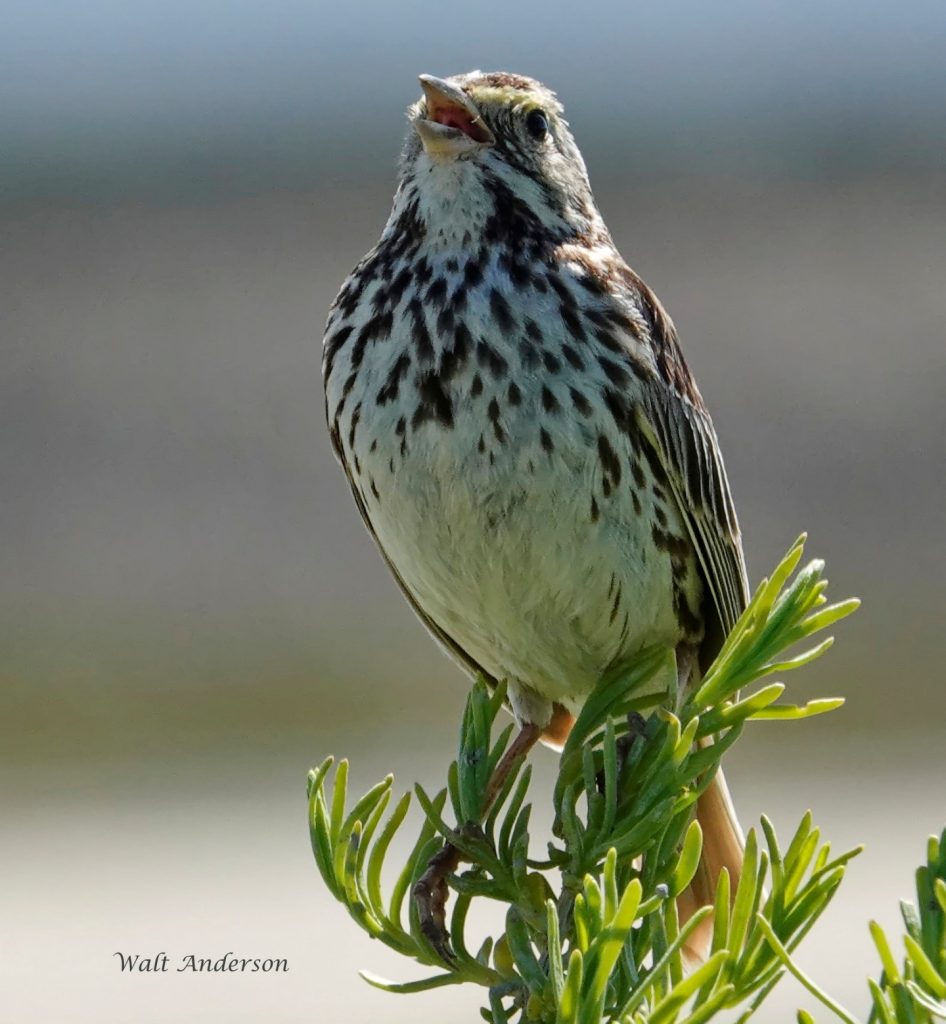
There is a good reason why this is not called a Song Sparrow (other than the very good reason that a melodius sparrow already has that name). Its song is pretty non-descript, though we do try describing it. Sibley refers to it as a “series of high, fine buzzes, each one lower than the one preceding: “ti ti ti tseeeeeeeee tisoooo.” Make sure you hear all those vowels. Definitely not melodius, but certainly sufficient to warn other Savannahs that this is a tough territory holder and a potentially fine mate, each role depending on your persuasion.
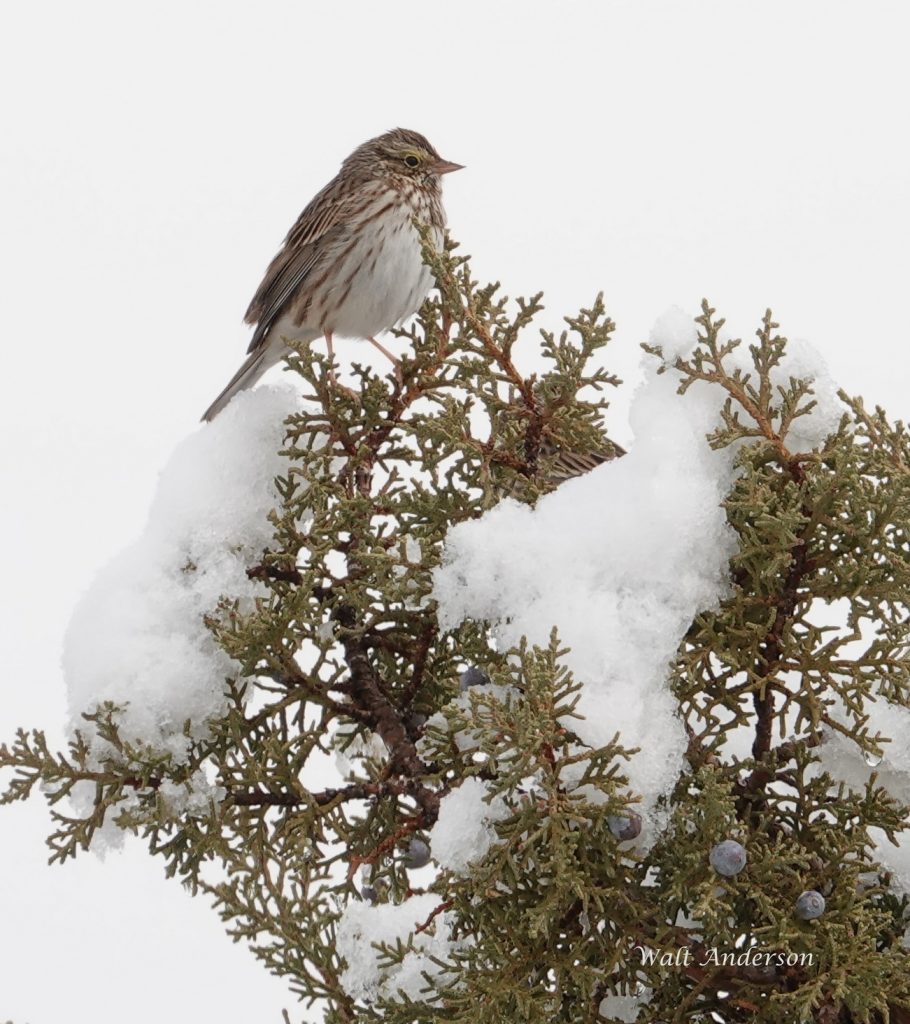
As long as they can find seeds or the occasional insect, they are pretty tolerant of winter, though they do withdraw from northern states and hang out in southern states and Mexico.
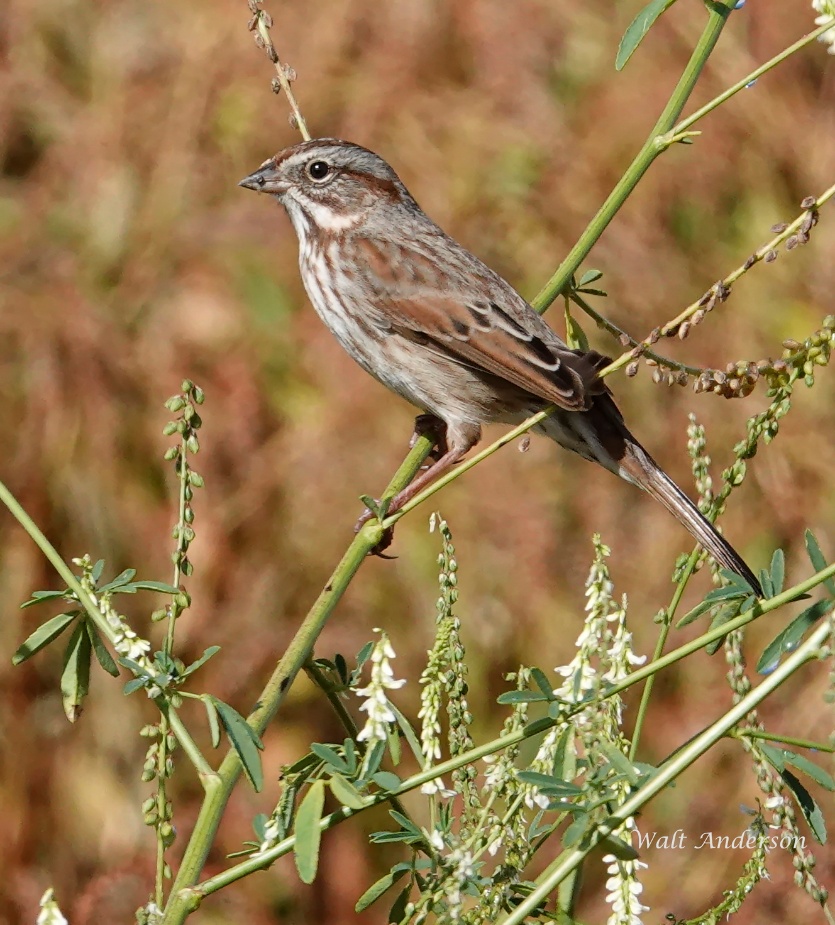
All right, let’s see if we can differentiate the Savannah from some other LBJ’s (little brown jobs). The Song Sparrow also has tremendous variability across its broad range, so it can help to have ID references specific to your region. Ours in the Southwest has rusty tints that you won’t see on our Savannah. It’s a larger bird with a longer, rounded tail. Its back is not so prominently striped, and there is no yellow on the forebrow. The bill is thicker and blunt, unlike the sharp point at the tip of the Savannah’s beak. Of course, if you hear it sing, you’ll appreciate its musical notes, unlike the buzzy trills of the Savannah.
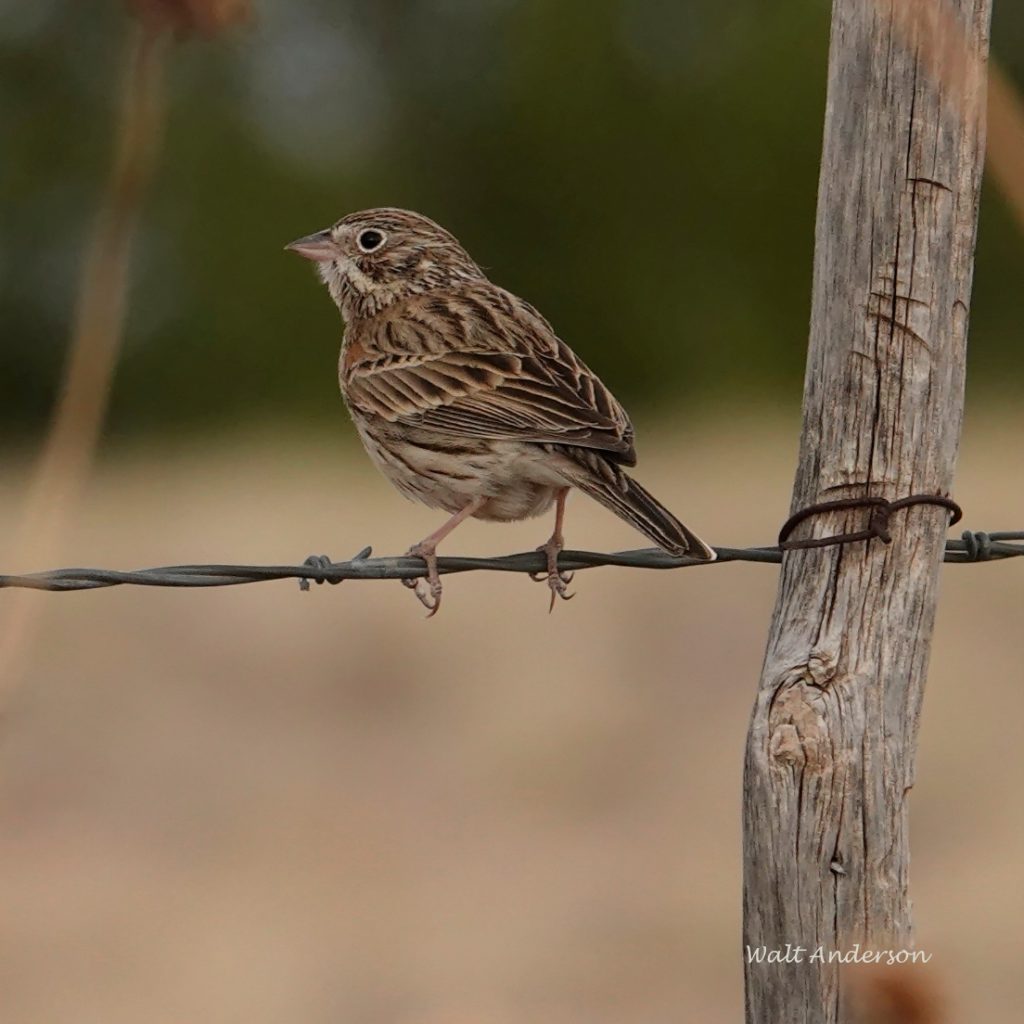
The Vesper Sparrow is also larger, with a longer tail that usually shows white outer tail feathers. Be aware that the Savannah can have pale edges, but its tail is short and notched at the tip. The Vesper’s white eyering and white “swoosh” at the jawline are helpful. The base of the bill is thicker. Occasionally you can see a small reddish patch at the bend of the wing, as this bird shows.
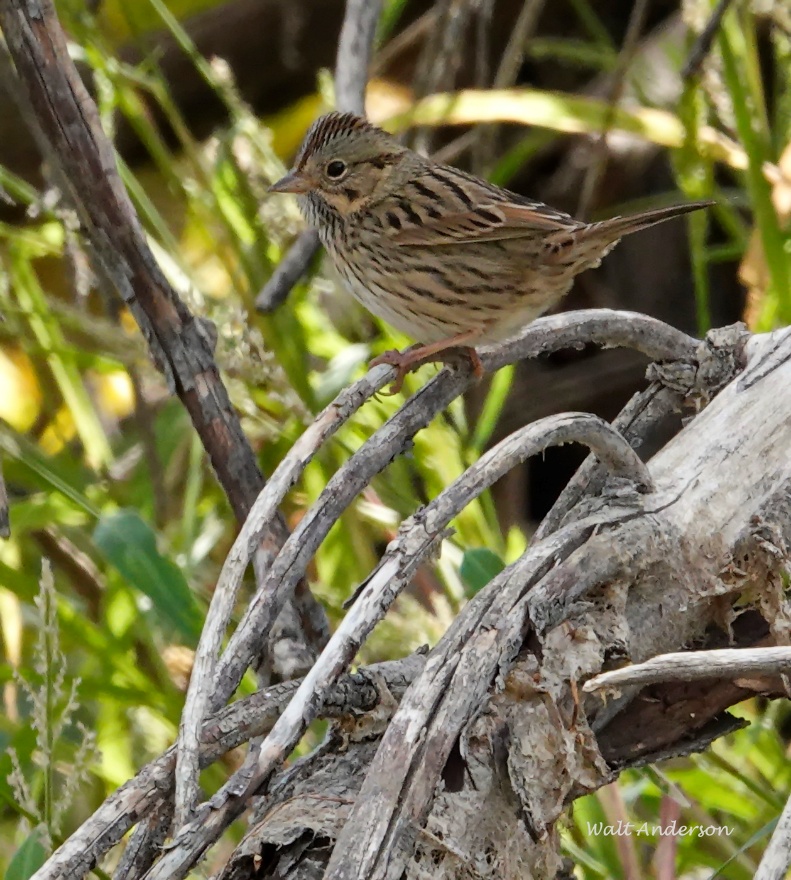
The Lincoln’s Sparrow has a gray face and buffy, finely streaked chest and flanks. It appears more delicate than the Song and Vesper Sparrows and often shows a triangular crown with feathers elevated.
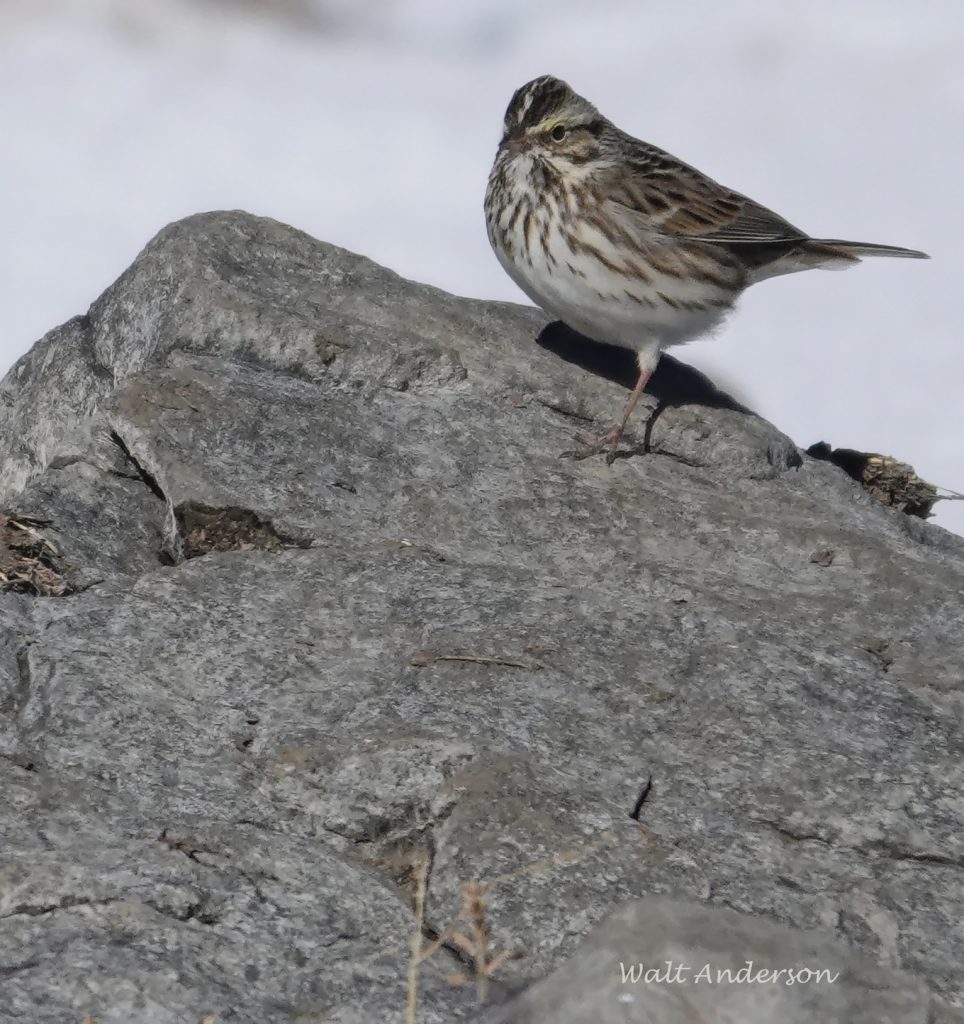
All right, I admit that the streaky sparrows can be difficult to identify. We don’t have the unlimited time to observe a moving bird the way we can study a still photograph. There is no substitute for careful observation in the field, as sounds, flight patterns, and other behaviors help to represent the total bird. It might be easy to identify an obvious bird like a robin or cardinal or jay and then dismiss it without further thought. Sparrows take effort, and therein lies the reward for careful scrutiny. In time, each LBJ reveals its intrinsic beauty. Take the sparrow challenge and truly earn your stripes.